 Save
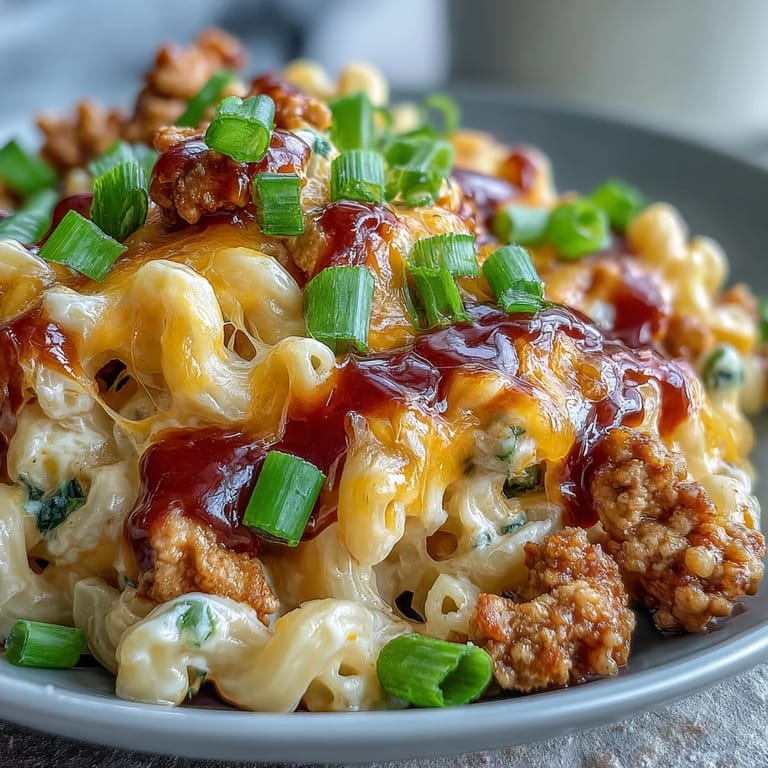
Save My coworker brought a container of gochujang to the office one Tuesday, raving about how it transformed everything from scrambled eggs to roasted vegetables. That evening, I stared at my pantry wondering what else could handle that sweet heat, and suddenly there it was—mac and cheese, the ultimate comfort food, waiting to meet Korean flavors halfway. This fusion happened almost by accident, but it's become the dish I make when I want something that feels both familiar and unexpectedly exciting.
I made this for my partner on a random Friday when we were both tired from work, and watching their eyes light up as they tasted that first spoonful was everything. The kitchen smelled like toasted sesame oil and melting cheddar, a combination I'd never realized needed to exist until that moment.
Ingredients
- Elbow macaroni (12 oz): The classic shape holds onto the creamy sauce beautifully, and cooking it just shy of package time keeps it from turning mushy when combined with the sauce.
- Whole milk (2 cups): Don't skip the fat content here—it creates a silky sauce that actually clings to the pasta instead of sliding off.
- Unsalted butter (2 tbsp): This is your roux base, so quality matters more than you'd think.
- All-purpose flour (2 tbsp): The thickening agent that transforms milk into a proper sauce without lumps, as long as you whisk like your life depends on it.
- Sharp cheddar cheese (1.5 cups): The sharpness cuts through richness and stands up to the bold Korean flavors without getting lost.
- Mozzarella cheese (0.5 cup): This adds stretch and creaminess without overpowering the cheddar's personality.
- Kosher salt and black pepper: Season as you go, not all at once—your palate will thank you.
- Ground turkey (1 lb): Leaner than beef but still flavorful enough to carry the gochujang's intensity.
- Gochujang (2 tbsp): Start with this amount and taste as you cook—different brands have different heat levels, and you want to enjoy every bite, not battle it.
- Low-sodium soy sauce (1 tbsp): This adds umami depth that makes the turkey taste more complex and satisfying.
- Honey (1 tbsp): The sweetness rounds out the spice and creates that addictive balance that keeps you coming back.
- Toasted sesame oil (2 tsp): Toasted is non-negotiable—the aroma alone tells your brain something special is happening.
- Garlic and ginger (2 cloves and 1 tsp): These aromatics bloom first and form the fragrant foundation for everything that follows.
- Scallions (4, sliced): They hit the plate fresh and bright, cutting through the richness with a gentle onion bite.
- Toasted sesame seeds (optional): A scattered finish that adds visual appeal and a subtle nutty crunch.
Tired of Takeout? 🥡
Get 10 meals you can make faster than delivery arrives. Seriously.
One email. No spam. Unsubscribe anytime.
Instructions
- Boil the pasta:
- Get your salted water rolling at a hard boil before the pasta goes in—this jump-starts cooking and seasons the noodles from the inside out. Drain when it's still slightly firm to the bite, because it'll soften a bit more when mixed with the hot sauce.
- Build the roux:
- Melt butter over medium heat, sprinkle flour over it, and whisk for a full minute before adding any milk—this cooks out the raw flour taste and prevents lumps. The mixture will look like wet sand at first, which is exactly right.
- Make the sauce:
- Pour milk in slowly while whisking constantly, moving from the center outward to catch any flour clumps trying to hide in the corners. Keep whisking until the sauce coats the back of a spoon and steam rises gently—about 3 to 4 minutes.
- Melt the cheese:
- Pull the heat down to low before adding cheese, stirring until each handful disappears into the cream. If the sauce ever looks broken or grainy, you've gone too hot—low and slow is the only way to keep cheese sauce silky.
- Cook the turkey with aromatics:
- Heat sesame oil until it shimmers, then add garlic and ginger to fill your kitchen with one of the best kitchen smells ever created. Let them toast for just one minute before the turkey goes in—you want fragrant, not burned.
- Build the turkey flavor:
- Break up the turkey as it cooks, pressing it into the skillet so it browns instead of steaming, which takes about 5 to 6 minutes total. Once it's no longer pink, add the gochujang, soy sauce, and honey, stirring everything together until the turkey is coated in a glossy, rust-colored sauce.
- Combine and serve:
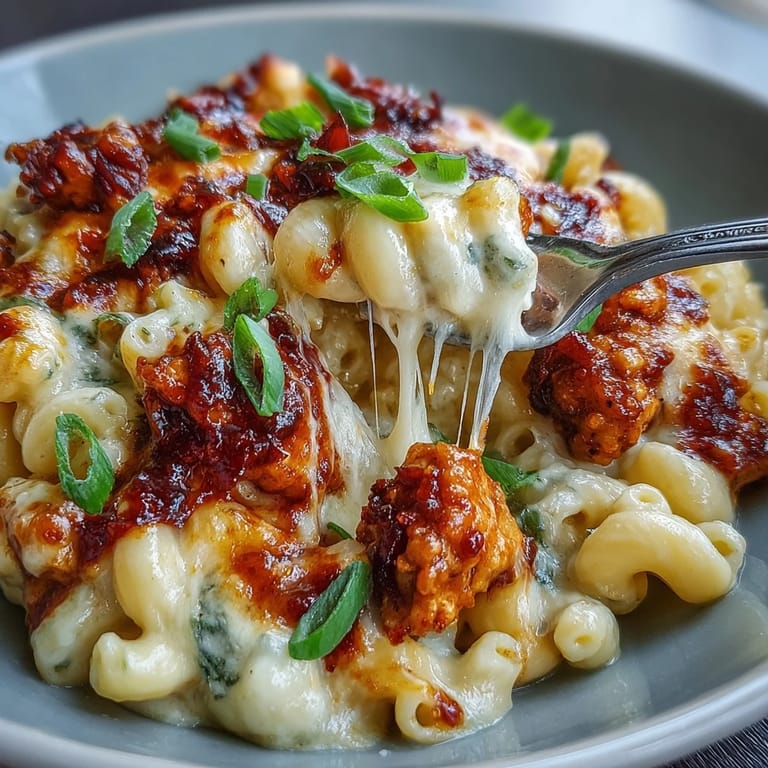
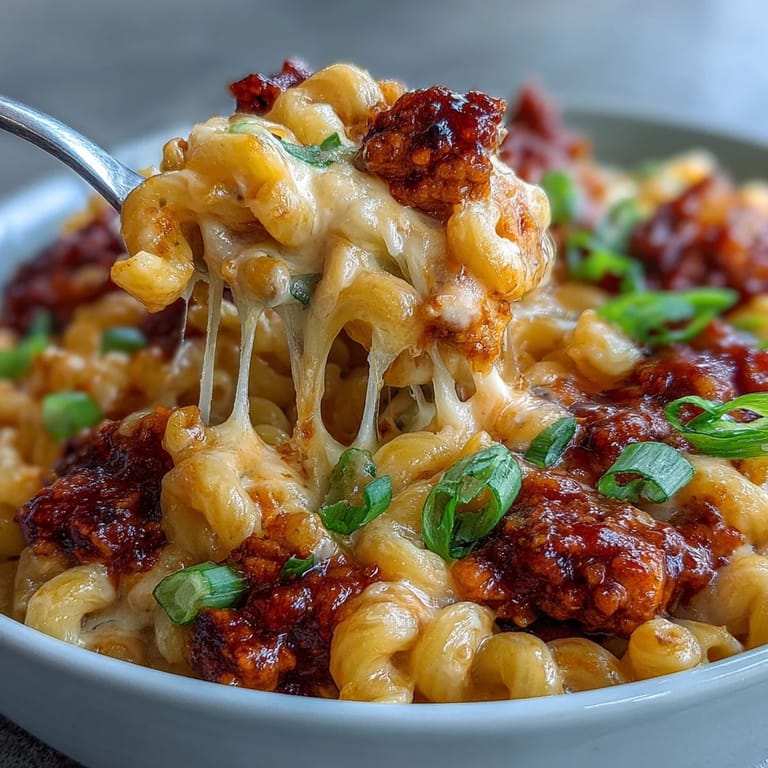
- Fold the turkey mixture into the mac and cheese gently—you want ribbons of spiced turkey throughout, not a uniform brown color. Serve immediately in bowls, topping each with fresh scallions and sesame seeds for contrast.
 Save
Save 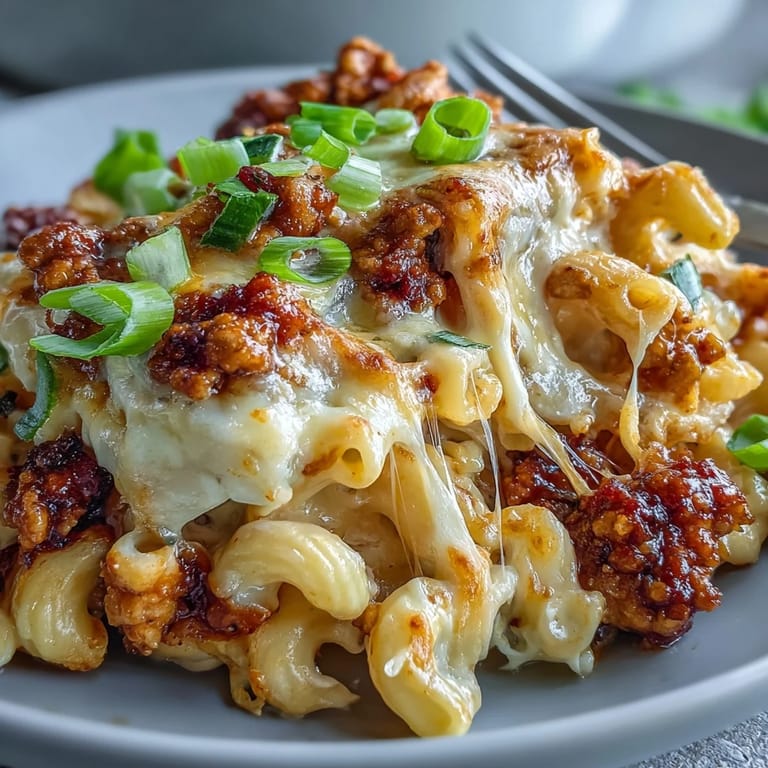 Save
Save This dish has become the thing I make when I want to show someone I care through food, because it says I took time to think about what they'd actually love, not just what's easy. There's something about the combination of comfort and surprise that feels like a small act of kindness.
The Flavor Balance That Works
The secret to this recipe's success is understanding that Korean chili paste, soy sauce, and honey create a trinity of flavors that don't fight each other—they dance. The gochujang brings heat and fermented depth, the soy sauce adds salty umami, and the honey wraps everything in a gentle sweetness that keeps your palate from getting overwhelmed. I discovered this balance by accident when I was trying to use up ingredients, but it's become the framework I use for other fusion dishes now.
Adapting This to Your Kitchen
Not everyone has gochujang hanging around, but if you love spice and Asian flavors, it's worth tracking down at any grocery store with an international aisle or ordering online—it keeps forever in the fridge. If you absolutely can't find it, sriracha mixed with a bit of miso paste gets you 80 percent of the way there, though the depth won't be quite the same. The beauty of this recipe is that it's flexible enough to work with ground chicken instead of turkey, or even crumbled firm tofu if you're cooking for vegetarians, though you'd want to add a splash of mushroom broth for savory depth.
Make It Your Own
The first time I made this, I added sautéed shiitake mushrooms because I had them lying around, and they became a permanent addition to my version. Some nights I'll stir in steamed broccoli right before serving, or top it with crispy fried onions for texture. The scallions are non-negotiable for freshness, but everything else is an invitation to experiment.
- If your gochujang tastes too intense, cut it back by half a tablespoon and taste as you go—heat builds.
- A squeeze of fresh lime juice over the finished bowl brightens everything and adds a subtle citrus note that feels elegant.
- Leftover mac and cheese reheats beautifully on the stovetop with a splash of milk, staying creamy instead of drying out in the microwave.
 Save
Save 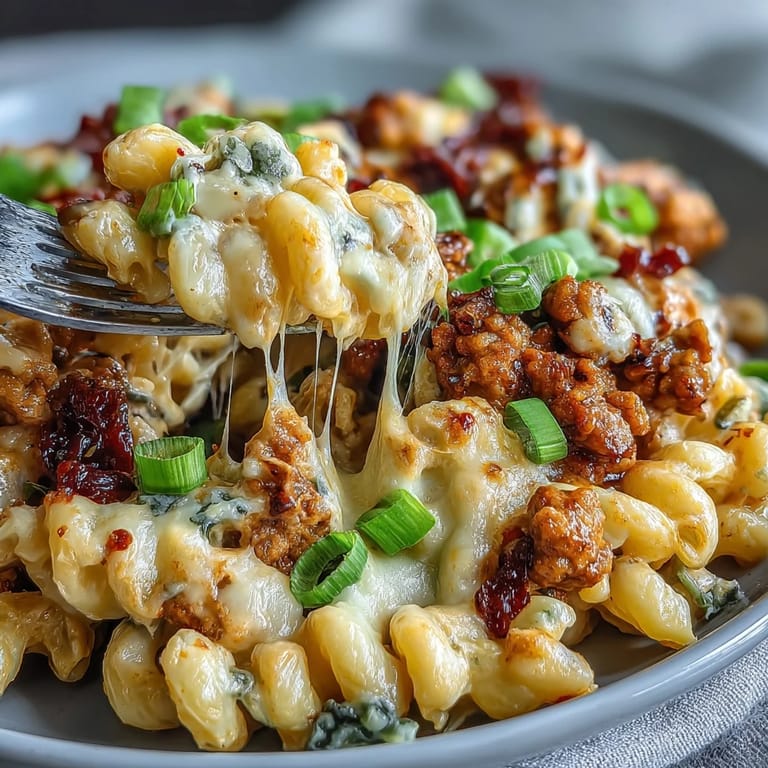 Save
Save This recipe taught me that comfort food doesn't have to be predictable, and the best meals are the ones that surprise you while making you feel cared for. Give it a try and make it yours.
Recipe FAQs
- → What does gochujang taste like?
Gochujang is a Korean fermented chili paste that delivers a complex flavor profile—savory, slightly sweet, and moderately spicy with deep umami notes from fermented soybeans.
- → Can I make this dish less spicy?
Yes. Reduce the gochujang to 1 tablespoon and omit the red pepper flakes. The honey helps balance heat, so you can also increase it slightly for a milder version.
- → What cheese works best for the sauce?
Sharp cheddar provides bold flavor, while mozzarella adds creaminess and excellent melt. You can substitute gruyère or fontina for a more gourmet touch.
- → Can I use ground chicken instead of turkey?
Absolutely. Ground chicken, beef, or pork all work well with the Korean seasoning. Adjust cooking time slightly as different meats may brown at different rates.
- → How do I store leftovers?
Store in an airtight container in the refrigerator for up to 3 days. Reheat gently with a splash of milk to restore creaminess. The pasta will absorb sauce as it sits.
- → What can I serve alongside this dish?
Steamed broccoli, sautéed bok choy, or a crisp cucumber salad with sesame dressing balance the richness. A light lager or chilled rosé pairs nicely.