 Save
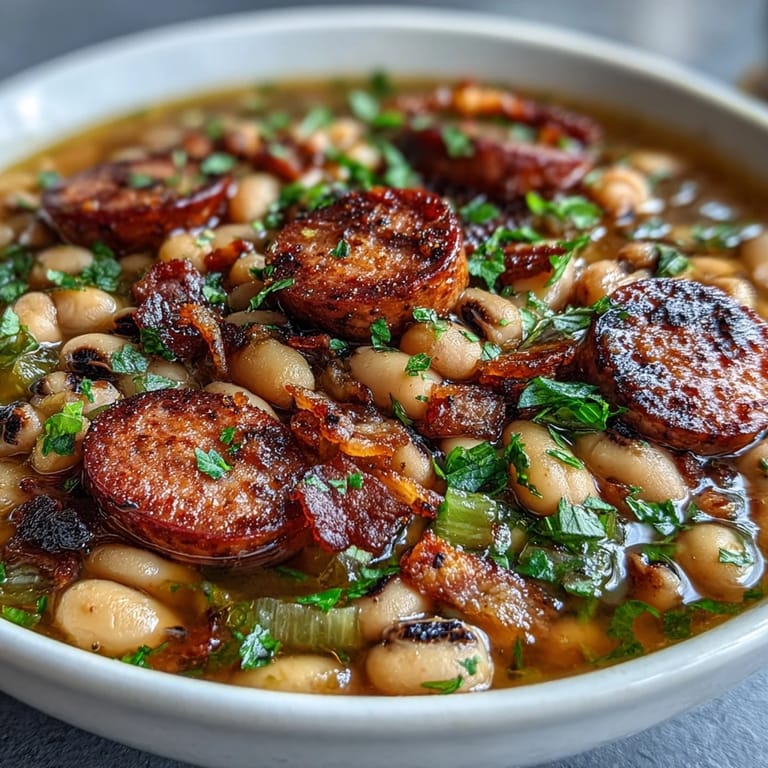
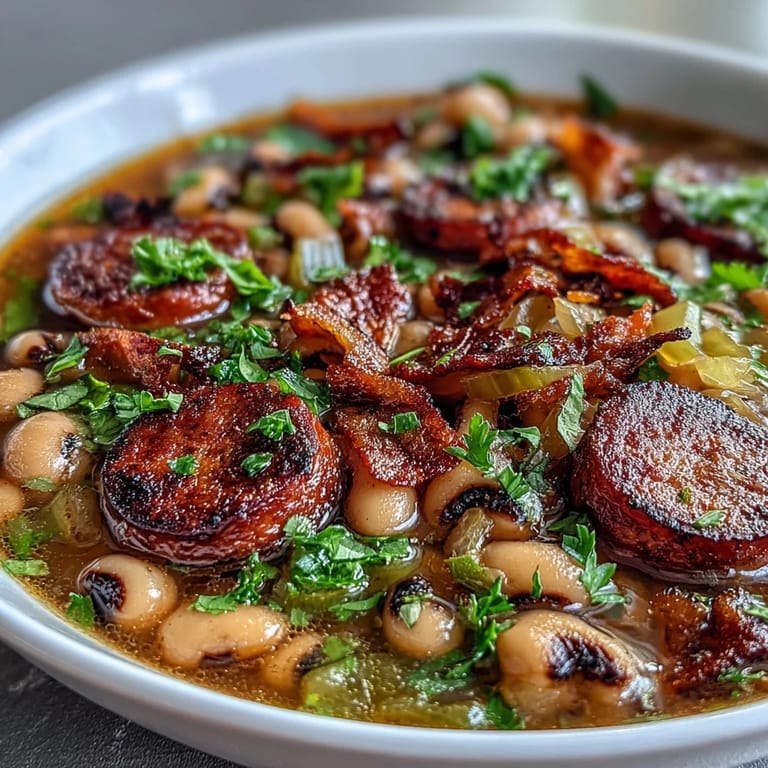
Save My grandmother used to say that black-eyed peas on New Year's Day weren't just food—they were insurance. I didn't understand until the first time I made this dish myself, filling my kitchen with the smell of smoky sausage and that unmistakable warmth of simmering broth. There's something about the way the spices settle into those tender peas that makes you feel like you've been cooking for hours, even though the prep is surprisingly straightforward. This version is hers, mostly, with a few tweaks I've learned along the way.
I made this for a group of friends who'd never had proper black-eyed peas, and watching their faces when they tasted that first spoonful—the way their eyes lit up—reminded me why this dish has survived generations. Someone asked for the recipe before dessert was even served, which tells you everything about how satisfying this really is.
Ingredients
- Smoked sausage (Andouille or Kielbasa), 225 g: This is where the soul of the dish lives; the smoke penetrates everything, so don't skimp on quality here.
- Thick-cut bacon, 115 g: Dice it yourself if you can—the rendered fat becomes your flavor foundation.
- Dried black-eyed peas, 450 g: Rinse and sort them carefully; you'd be surprised how often a pebble hides in there.
- Large onion, diced: This becomes almost translucent and sweet as it cooks down, creating the base for everything else.
- Green bell pepper, diced: It softens beautifully and adds a subtle sweetness that balances the spice.
- Celery stalks, 2, diced: This completes the holy trinity and adds an herbaceous quality that rounds out the flavor.
- Garlic cloves, 3, minced: Add this after the other vegetables soften, or it'll burn and taste bitter.
- Low-sodium chicken broth, 1.5 liters: Use good broth; it's the liquid that becomes your sauce.
- Water, 240 ml: This dilutes the saltiness slightly and lets the peas flavor the cooking liquid more evenly.
- Bay leaves, 2: These add a subtle earthiness; don't forget to fish them out before serving.
- Smoked paprika, 1 tsp: This deepens the smoke without overwhelming; it's essential to the character here.
- Dried thyme, 1/2 tsp: A whisper of herbaceousness that makes people wonder what that flavor is.
- Cayenne pepper, 1/2 tsp (optional): Add this only if you like heat; it sneaks up on you.
- Freshly ground black pepper, 1/2 tsp: Grind it fresh—it makes a difference in how the spice feels on your tongue.
- Kosher salt, 3/4 tsp: Start here and taste as you go; you'll likely add more once the peas are tender.
- Fresh parsley, 2 tbsp, chopped: This brightens everything at the end and adds a pop of color.
- Hot sauce, to serve: Let people add their own heat at the table.
Tired of Takeout? 🥡
Get 10 meals you can make faster than delivery arrives. Seriously.
One email. No spam. Unsubscribe anytime.
Instructions
- Prepare your peas overnight (or take the quick route):
- If you're thinking ahead, soak the rinsed black-eyed peas in cold water overnight—this softens them and makes cooking faster. If you're working with what you have, cover them with boiling water, let them sit for an hour, then drain and rinse; it works almost as well.
- Render the bacon into liquid gold:
- In your Dutch oven over medium heat, cook the diced bacon slowly until it's crispy and the fat is golden. Remove it with a slotted spoon and set it aside; you're building layers of flavor here.
- Brown the sausage:
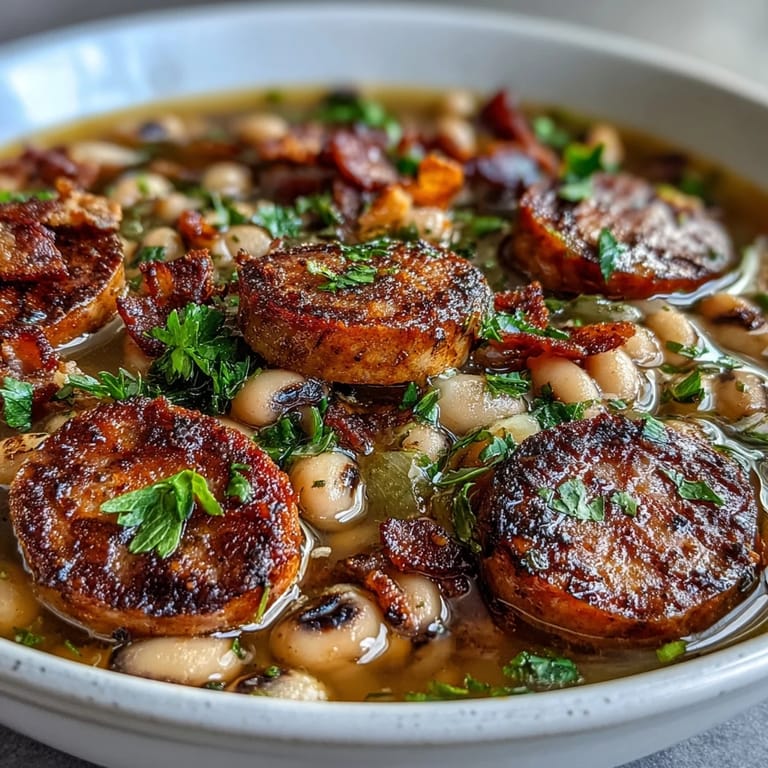
- In that same pot with all that bacon fat still clinging to the bottom, add your sliced sausage and let it sit for a minute before stirring. This creates a slight crust that adds texture and deepens the smokiness.
- Build the base with vegetables:
- Add your diced onion, bell pepper, and celery to the pot and let them soften over medium heat for about five to six minutes, stirring occasionally. When they're starting to look translucent and smell almost sweet, add your minced garlic and cook for just one more minute—you want it fragrant, not burnt.
- Bring everything together in the broth:
- Stir in your drained peas, chicken broth, water, bay leaves, and all your spices. Return the cooked bacon and sausage to the pot, stir well, and bring everything to a boil over medium-high heat.
- Let time do the work:
- Once it's boiling, lower the heat to a gentle simmer, cover the pot, and walk away for about an hour to an hour and a half. The peas will gradually soften, and the broth will deepen in color and flavor as everything melds together.
- Taste and adjust:
- When the peas are tender enough to break easily with a wooden spoon, taste the broth. It might need more salt—remember, you started with low-sodium broth. Fish out those bay leaves before you forget.
- Finish and serve:
- Sprinkle fresh parsley over the top just before serving, and set out hot sauce for anyone who wants to add their own heat. Serve it over rice or alongside cornbread and sautéed greens.
 Save
Save There's a quietness that happens when you're standing at the stove watching a pot simmer for ninety minutes, and somewhere in that time, this dish stops being an ingredient list and becomes something that makes people want to linger at the table. That's when you know you've got it right.
The Story Behind the Spices
Smoked paprika and cayenne aren't just heat—they're storytellers. The paprika whispers of slow-smoked meats and Spanish influences that found their way into Southern kitchens centuries ago, while the cayenne (if you use it) adds a slow burn that builds as you eat. I learned the difference between buying paprika pre-ground and smoking your own peppers, and while I don't always have time for the latter, I've learned to taste the difference, which somehow makes the pre-ground version go further in my mind.
Why This Works Better Than You'd Expect
The magic isn't in any single ingredient—it's in the order and timing. You render the bacon first because its fat becomes the foundation for everything that follows. The vegetables soften in that fat before the liquid comes in, so they release their sweetness into the oil rather than being blanched. The sausage adds smoke that permeates every pea, and the long simmer means the peas don't just get tender; they absorb the entire flavor profile of the pot. This is why instant versions never taste quite right—they skip the alchemy.
Making It Your Own
This dish is forgiving enough to adapt, which is part of why it's survived so long. Some kitchens add diced tomatoes near the end for brightness, others throw in collard greens for earthiness, and I've met people who add a splash of apple cider vinegar at the finish for a subtle tang. The vegetarian version works too—swap the broth for vegetable broth and add an extra teaspoon of smoked paprika or a few drops of liquid smoke to replace what the meat provides.
- Collard greens or diced tomatoes can be stirred in during the last fifteen minutes of cooking.
- For deeper flavor without meat, use vegetable broth and increase the smoked paprika or add liquid smoke.
- Leftovers actually improve after a day in the refrigerator as the flavors continue to meld.
 Save
Save This dish is as much about the ritual as it is about eating—the time it takes to cook it, the smells that fill your kitchen, the way people gather around it. Make it once, and you'll understand why it's been passed down through generations.
Recipe FAQs
- → Do I need to soak black-eyed peas before cooking?
Yes, dried black-eyed peas should be soaked overnight in water, then drained and rinsed. For a quicker method, cover them with boiling water and let stand for one hour before draining.
- → Can I make this vegetarian?
Absolutely. Simply omit the bacon and sausage, substitute vegetable broth for chicken broth, and add extra smoked paprika or a few drops of liquid smoke to maintain that signature smoky depth.
- → What's traditionally served with black-eyed peas?
Black-eyed peas are classic served over steamed white rice with cornbread on the side. Collard greens or sautéed greens make excellent accompaniments, and iced tea or a crisp white wine pair beautifully.
- → How long do these keep in the refrigerator?
Store cooled black-eyed peas in an airtight container for up to 4-5 days. The flavors often deepen and improve after a day or two. Reheat gently on the stovetop, adding a splash of broth if needed.
- → Why are black-eyed peas eaten on New Year's Day?
Southern tradition holds that eating black-eyed peas on New Year's Day brings prosperity and good luck for the coming year, with the peas symbolizing coins and the collard greens often served alongside representing paper money.