 Save
Save The smell of sesame oil and ginger always pulls me back to a tiny apartment kitchen where I first attempted ramen. It was a freezing Tuesday, the kind where your nose hurts when you step outside. I had a cheap slow cooker and a chuck roast from the discount bin. That first batch was far from restaurant quality, but something about the way the house smelled for eight hours made me realize comfort food does not need to be complicated to feel special.
My neighbor knocked on my door three hours into that first attempt, asking what I was making. She ended up staying for dinner with her own bowl. We sat on the floor with steaming bowls, watching the snow fall, neither of us saying much. Sometimes the best meals are the ones that bring people together without anyone trying to make it an occasion.
Ingredients
- Beef chuck roast: The marbling melts into the broth, creating that silky mouthfeel you get from restaurant ramen. Cutting it into chunks helps it cook evenly.
- Salt and pepper: Do not skip this step. Even a generous seasoning before cooking makes a noticeable difference in the final flavor.
- Onion: Thinly sliced onions almost dissolve into the broth, adding natural sweetness without any overpowering onion flavor.
- Garlic: Fresh minced garlic beats pre-minced jars here. It mellows out during the long cook time.
- Fresh ginger: Grating it releases more oils than chopping. Peel it first with a spoon for less waste.
- Beef broth: Low-sodium lets you control the salt level. The brown sugar helps balance any sharpness.
- Water: Diluting the broth slightly prevents the final soup from being too intense after hours of reduction.
- Soy sauce: This provides the umami base. Low-sodium is especially important here since the broth concentrates.
- Sesame oil: Toasted sesame oil adds that distinct nutty aroma that signals ramen immediately.
- Brown sugar: A subtle sweetness that mimics the caramelization you would get from stovetop cooking.
- Ramen noodles: Fresh noodles have better texture than dried ones. Cook them separately so they do not turn to mush in the hot broth.
- Baby spinach: Wilts instantly in the hot broth and adds a pop of color without much work.
- Green onions: Fresh contrast to the rich, slow-cooked flavors.
- Soft-boiled eggs: Totally optional but highly recommended if you have an extra five minutes.
- Sriracha or chili oil: Let people add their own heat level at the table.
Tired of Takeout? 🥡
Get 10 meals you can make faster than delivery arrives. Seriously.
One email. No spam. Unsubscribe anytime.
Instructions
- Season the beef:
- Sprinkle salt and pepper over the chunks, turning them to coat all sides. Do not be shy with the seasoning since some will cook off into the broth.
- Build the base:
- Arrange the beef in the slow cooker first. Layer the sliced onion, minced garlic, and grated ginger on top. The aromatics will infuse the meat as it cooks.
- Add the liquids:
- Pour in the beef broth and water. Add the soy sauce, sesame oil, and brown sugar. Stir gently just once to combine the liquids without disturbing the layers too much.
- Let it cook:
- Cover and set to low for 8 hours or high for 4 hours. You will know it is done when the beef shreds easily with a fork.
- Prep the noodles:
- About 10 minutes before serving, cook the ramen noodles according to the package. Drain them well and set aside. Cooking them separately keeps them from getting soggy.
- Shred the beef:
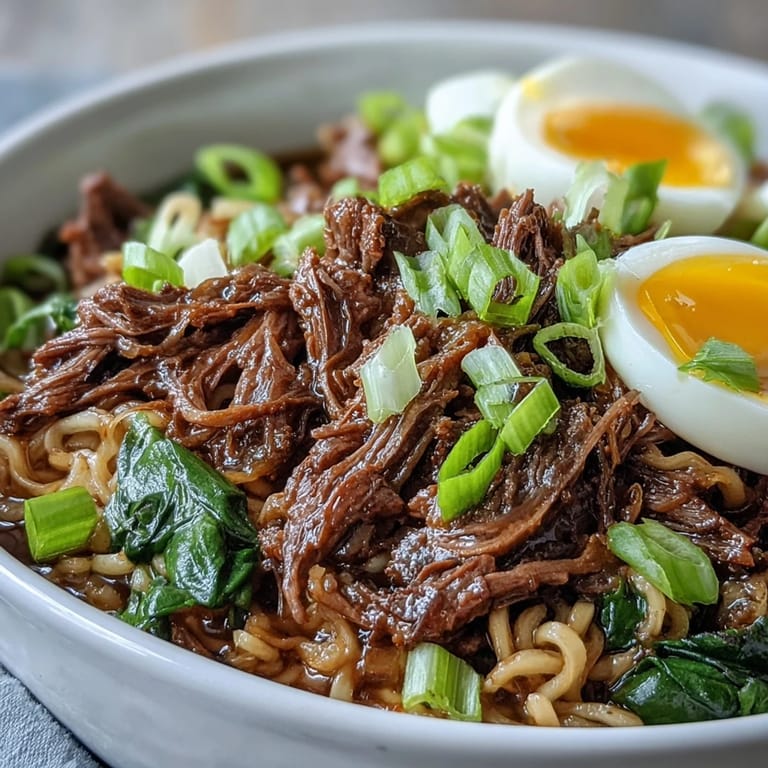
- Use two forks to pull the beef apart right in the slow cooker. The meat should be tender enough that this takes almost no effort.
- Add the greens:
- Stir in the baby spinach and let it wilt for 2 to 3 minutes. It should just barely soften but still have some structure.
- Assemble the bowls:
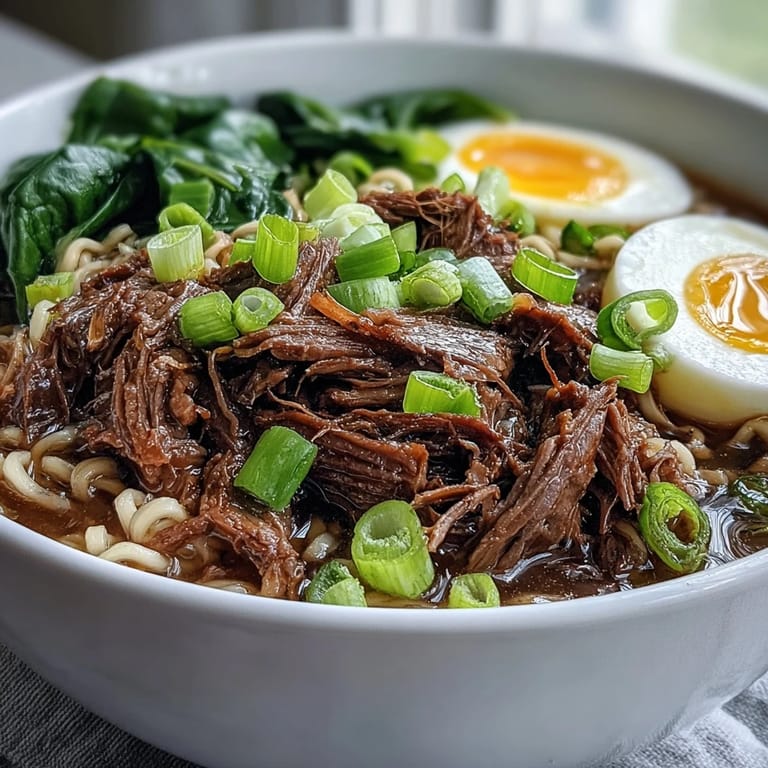
- Divide the noodles between bowls. Ladle the beef and broth generously over the top. Make sure everyone gets plenty of meat and vegetables.
- Finish it off:
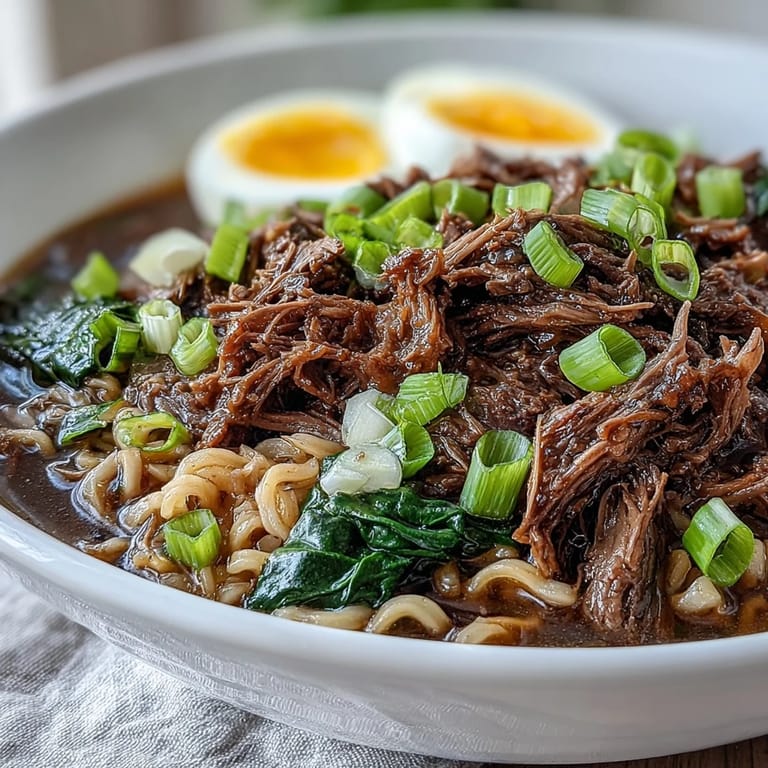
- Top with sliced green onions and halved soft-boiled eggs if you are using them. Pass the Sriracha or chili oil at the table so people can adjust the heat.
 Save
Save That snowy night with my neighbor became a regular thing. We started taking turns adding our own twists to the basic recipe. She introduced mushrooms. I started making extra soft-boiled eggs because she loved them. The recipe never stayed the same, which feels like the whole point.
Making It Your Own
Once you have the basic method down, start playing with vegetables. Bok choy holds up better than spinach and adds a pleasant crunch. Napa cabbage brings sweetness. Even shredded carrots work well if that is what you have. The broth is forgiving enough to handle almost any addition.
Timing Is Everything
The long cook time is what makes this work, but you can rush it if needed. High heat for 4 hours gets you close, though low and slow always yields better results. The difference is in how the collagen breaks down, turning tough cuts into something that practically melts.
Serving Suggestions
This is a meal that deserves to be lingered over. Set out small bowls of extra garnishes so everyone can customize their bowl. It turns dinner into something interactive without much extra work.
- Keep some nori sheets on hand for wrapping up bites
- Corn kernels add unexpected sweetness that balances the rich broth
- A splash of rice vinegar brightens each bowl right before eating
 Save
Save Now this recipe lives on my counter most weeks. The slow cooker does the heavy lifting while I go about my day, and by evening the whole house smells like something far more complicated than it actually is.
Recipe FAQs
- → Can I use a different cut of beef?
Beef chuck roast is ideal for slow cooking because it becomes tender and shreddable. You can substitute beef brisket, short ribs, or stew meat. Avoid lean cuts like sirloin as they may become tough during long cooking.
- → Can I cook the noodles directly in the slow cooker?
Cooking noodles separately is recommended. Ramen noodles absorb liquid quickly and can become mushy if left in the broth too long. Cook them according to package directions, drain, and add to individual bowls when serving.
- → How do I store leftovers?
Store beef and broth in an airtight container for up to 4 days. Keep noodles separate to prevent them from absorbing all the liquid. Reheat broth and beef on the stovetop, then cook fresh noodles when ready to serve.
- → Is this suitable for meal prep?
Absolutely. The beef and broth actually taste better after a day or two as flavors meld. Make a large batch, portion into containers, and simply cook fresh ramen noodles when ready to eat throughout the week.
- → Can I make this gluten-free?
Yes. Replace soy sauce with tamari and use gluten-free ramen or rice noodles. Verify all other ingredients, including broth and condiments, are certified gluten-free to avoid cross-contamination.
- → What vegetables work well in addition to spinach?
Bok choy, napa cabbage, mushrooms, carrots, corn, or snow peas all complement the flavors. Add heartier vegetables like carrots and mushrooms early so they soften, while delicate greens go in during the last few minutes.