 Save
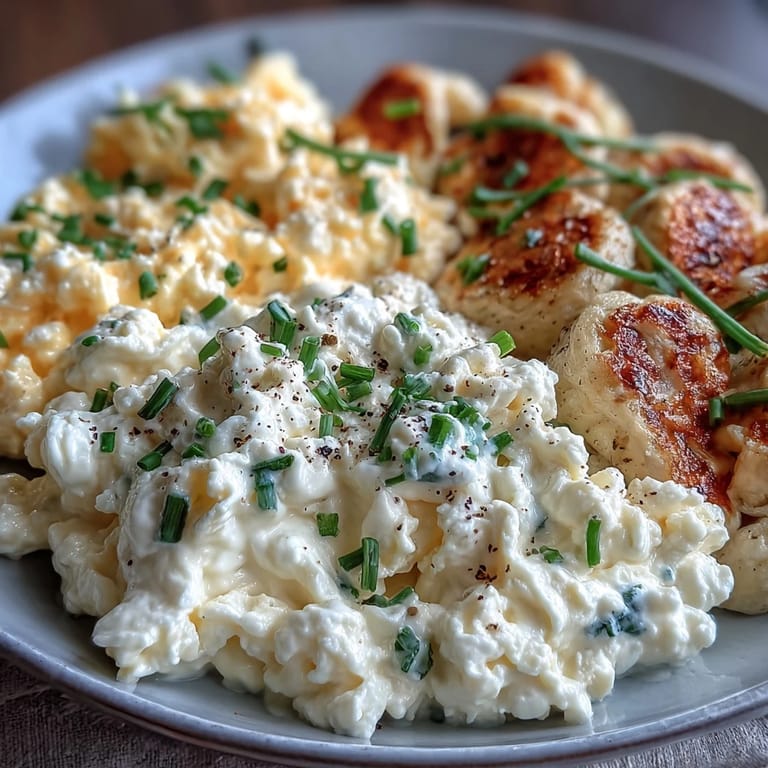
Save Anytime I hear eggs sizzle gently in a skillet, I’m reminded how just the right kitchen improvisation can transform a routine breakfast. One lazy weekend morning, searching for a way to stretch out the last of my groceries, cottage cheese wound up in my eggs—an accident that tasted a whole lot like a breakthrough. That tangy creaminess and cloudlike texture convinced me to never look at a tub of cottage cheese the same way again. For anyone who scoffs at the idea, wait until you catch that hint of buttery steam wafting up as you stir. Creamy, custardy, and packed with protein, this recipe is a sillier, more satisfying cousin to plain old scrambled eggs.
Last spring, my sister and I tried these out before a morning hike, bleary-eyed and impatient. I accidentally left the eggs a bit softer than she liked, but the cottage cheese worked its charm: she took one bite, grinned, and started gushing about how fancy breakfast could feel on a Tuesday. We ended up laughing over our mismatched mugs of coffee, arguing about the best toast toppings. Now, whenever she visits, she requests 'those eggs' by name. Some recipes just slip right into your family’s routine that way.
Ingredients
- Eggs: Fresh, high-quality eggs make all the difference for rich flavor and tender texture; I always whisk a bit longer than I used to, for extra fluffiness.
- Cottage cheese: Low-fat or full-fat both work, but full-fat gives that lush, almost luxurious creaminess; a chunkier cottage cheese melts into lovely pockets.
- Unsalted butter: Melting butter until it foams (not browns) lets the eggs cook slowly and gently—don’t rush this step.
- Chives or green onions: They lift up the richness; if you’re out, a sprinkle of parsley or basil works too.
- Salt: Go easy at first—cottage cheese adds a bit of saltiness on its own, and you can always add more at the table.
- Freshly ground black pepper: The scent as you grind it right over the eggs just before serving brings the whole thing to life.
Tired of Takeout? 🥡
Get 10 meals you can make faster than delivery arrives. Seriously.
One email. No spam. Unsubscribe anytime.
Instructions
- Whisk the eggs:
- Crack the eggs into a medium bowl, add salt and pepper, and whisk until the mixture runs smooth and golden, just starting to froth.
- Add the cottage cheese:
- Fold the cottage cheese gently into the whisked eggs so you see small curds—don’t overmix or you’ll lose the nice texture.
- Heat the pan:
- Set a nonstick skillet over medium-low heat, drop in the butter, and wait for it to sizzle and brown slightly around the edges.
- Cook the eggs:
- Pour in the egg mixture and use a spatula to slowly scrape and fold the eggs as they set, taking care to cover the whole surface.
- Finish and serve:
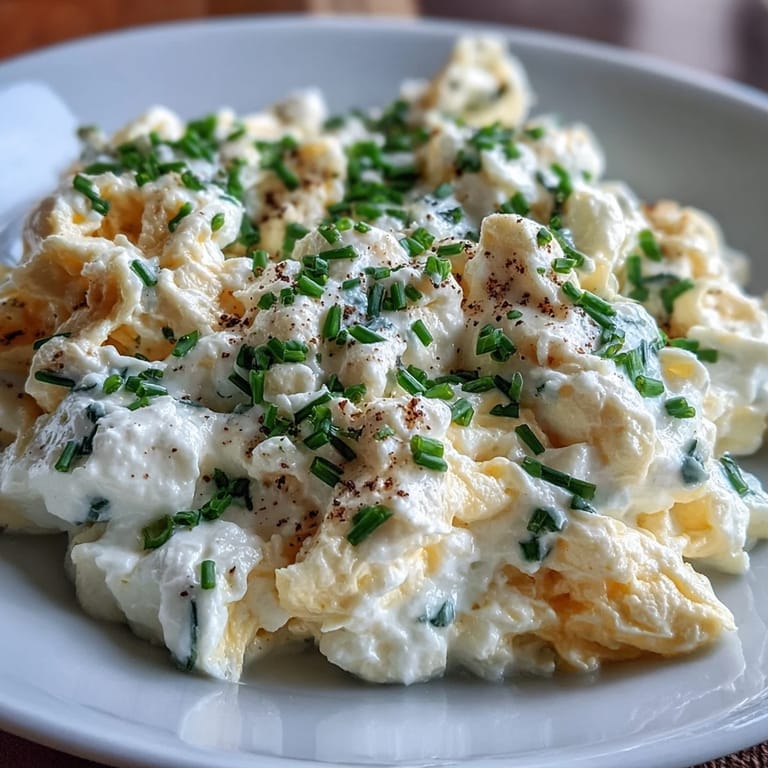
- Let the eggs stay creamy and a little loose, then scatter with fresh chives or green onions—serve them steaming, before they firm up too much.
 Save
Save When I made these for friends after a chilly morning run, we sat around in sweatshirts, barely talking while savoring each creamy bite. Somewhere mid-plate, my friend confessed he’d always thought cottage cheese was 'granny food'—until he asked for seconds.
The Joy of Tiny Tweaks
Some mornings, I reach for smoked paprika or toss in a handful of baby spinach just before the eggs set; other days, a little smoked salmon or leftover turkey from last night’s dinner sneaks its way in. The base recipe handles whatever whim or fridge-foraging adventure you’re up for, no fuss.
How to Serve It Up
I’m a fan of piling these eggs on toasted sourdough with sliced tomatoes, but if you’re avoiding bread, roasted asparagus makes them brunch-worthy. They’re filling enough for lunch and somehow always feel a little decadent, even with freezer veggies on the side.
Allergy Swaps and Other Quick Fixes
The beauty of scrambled eggs is adaptability: for dairy-free folks, silken tofu and a glug of olive oil do the trick, although the flavor changes just a touch. Whole eggs work best, but I’ve even used half egg whites for a lighter take.
- Don’t skip the chives—they add a bright, fresh contrast.
- If you use store-bought cottage cheese, peek at the label for hidden ingredients.
- Always cook these lower and slower than you expect—patience pays off.
 Save
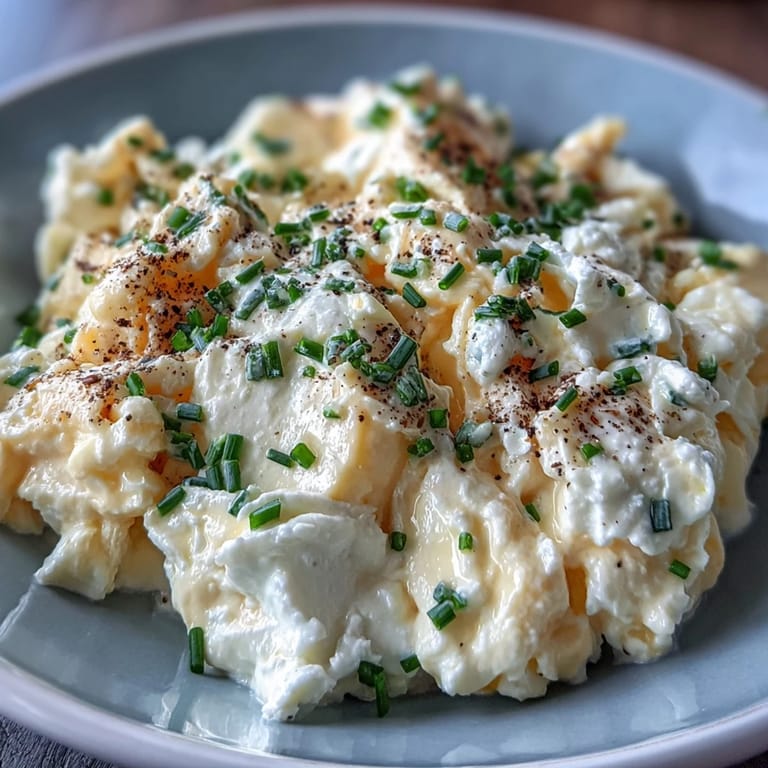
Save Here’s to making breakfast feel special without fuss—sometimes the best meals just start with a half-empty fridge and a little curiosity. May these creamy, protein-rich eggs surprise someone at your table as much as they surprised me.
Recipe FAQs
- → Can I use low-fat cottage cheese?
Yes. Low-fat cottage cheese works and reduces calories, but it can add extra moisture and yield a slightly less rich texture. For a creamier result, use full-fat or drain excess liquid from low-fat curds before folding in.
- → How do I prevent the eggs from overcooking?
Cook over medium-low heat and stir gently and continuously. Remove the pan from heat when the eggs are still slightly creamy; carryover heat will finish them. Avoid high heat, which causes dry, rubbery curds.
- → What are good substitutes for cottage cheese?
Ricotta or full-fat Greek yogurt can provide similar creaminess. For a dairy-free option, use blended silken tofu with a touch of olive oil or plant-based cream to mimic texture.
- → How can I boost the protein even more?
Fold in diced cooked turkey, smoked salmon, or a handful of shredded cooked chicken. Adding extra egg whites or serving with Greek yogurt on the side also increases protein content.
- → What’s the best way to store and reheat leftovers?
Cool quickly, refrigerate in an airtight container, and consume within 1–2 days. Reheat gently in a nonstick skillet over low heat or microwave in short bursts, stirring often to preserve creaminess.
- → Any tips for flavor variations?
Stir in smoked paprika, a pinch of cayenne, or fresh herbs like dill. Add sautéed spinach, roasted tomatoes, or caramelized onions for more depth and color.