 Save
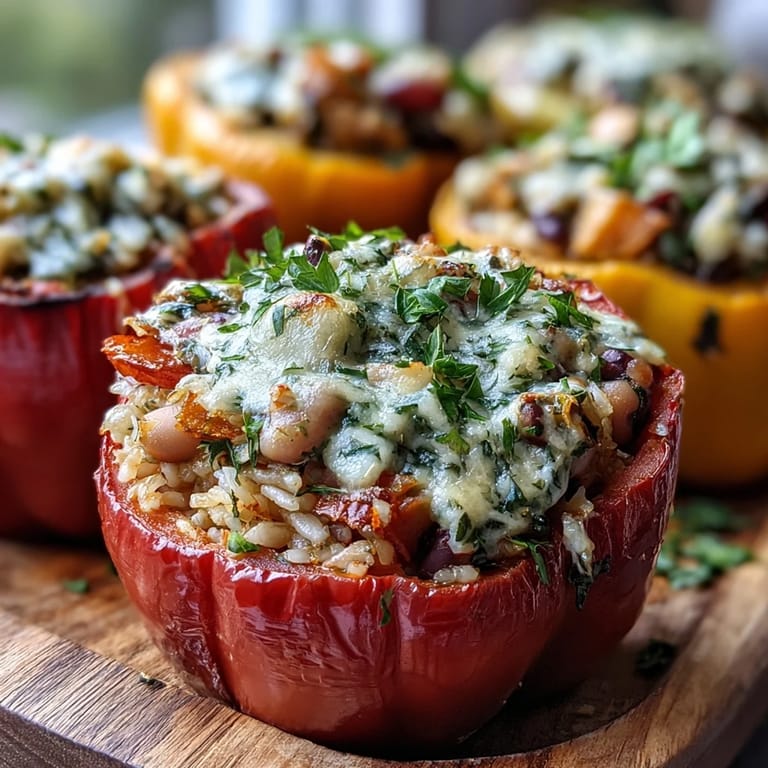
Save There's something about a stuffed pepper that makes you feel like you've accomplished something real in the kitchen. I discovered these black-eyed pea versions on a random Tuesday when my pantry was looking sparse but I had a bunch of bell peppers that needed rescuing. What started as a practical solution turned into one of those dishes I now make on purpose, not just out of necessity. The combination of smoky spices, creamy peas, and tender peppers became instant comfort food in our house.
I remember bringing a tray of these to a potluck where I wasn't sure how vegetarian-focused the crowd would be, and watching people go back for seconds before touching anything else on the table. One friend asked if there was meat in them, and when I said no, she seemed genuinely surprised. That's when I knew this recipe was the real deal—it doesn't announce itself as 'vegetarian food,' it just announces itself as delicious.
Ingredients
- Bell peppers (4 large, any color): The stars of the show, and honestly, the prettier your pepper selection, the prettier your final dish; red and yellow peppers are naturally sweeter, while green ones bring a subtle grassy edge.
- Black-eyed peas (1 cup cooked): If you're using canned, that rinse-and-drain step is worth those extra seconds because it cuts down the sodium and makes the filling taste fresher.
- Long-grain rice (1 cup cooked): This acts as the binding agent and stretches the filling so it's not too dense; use whatever rice you have on hand.
- Onion, garlic, carrot, and celery: The aromatic base that makes your kitchen smell incredible while sautéing; don't skip the mincing—smaller pieces distribute the flavor more evenly.
- Smoked paprika and cumin: These two are where the magic lives, giving the filling that warm, slightly smoky character that makes people ask what your secret ingredient is.
- Fresh parsley: A sprinkle at the end lifts everything and adds a brightness that feels intentional rather than afterthought.
- Olive oil and vegetable broth: The broth creates steam that keeps the peppers from drying out while baking, so don't skimp on this step.
Tired of Takeout? 🥡
Get 10 meals you can make faster than delivery arrives. Seriously.
One email. No spam. Unsubscribe anytime.
Instructions
- Prepare your peppers:
- Slice the tops off each bell pepper and scoop out the seeds and white membranes—a grapefruit spoon works surprisingly well for this if you don't have a melon baller. A light brush of olive oil on the outside helps them brown beautifully as they bake.
- Build the aromatic base:
- Heat your oil and sauté the onion, garlic, carrot, and celery until the vegetables start to soften and the kitchen smells like home cooking. You're looking for that point where everything looks translucent and smells golden, usually around five to six minutes.
- Marry the filling:
- Add your cooked black-eyed peas and rice to the vegetable mixture, then dust in all your spices and stir everything together until it's evenly colored. This is when you taste and adjust—if it needs more salt or heat, now's the moment to know it.
- Fill with intention:
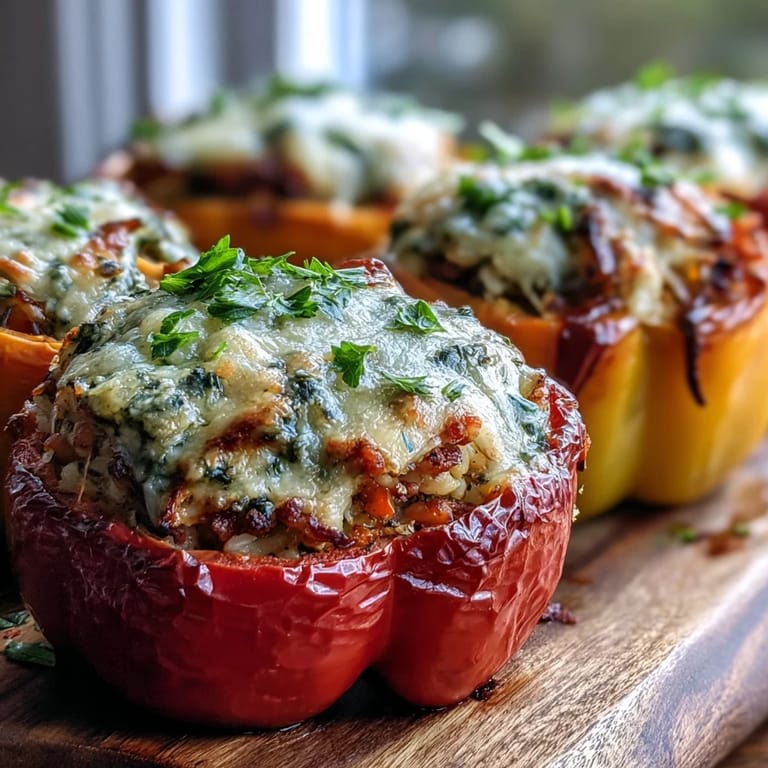
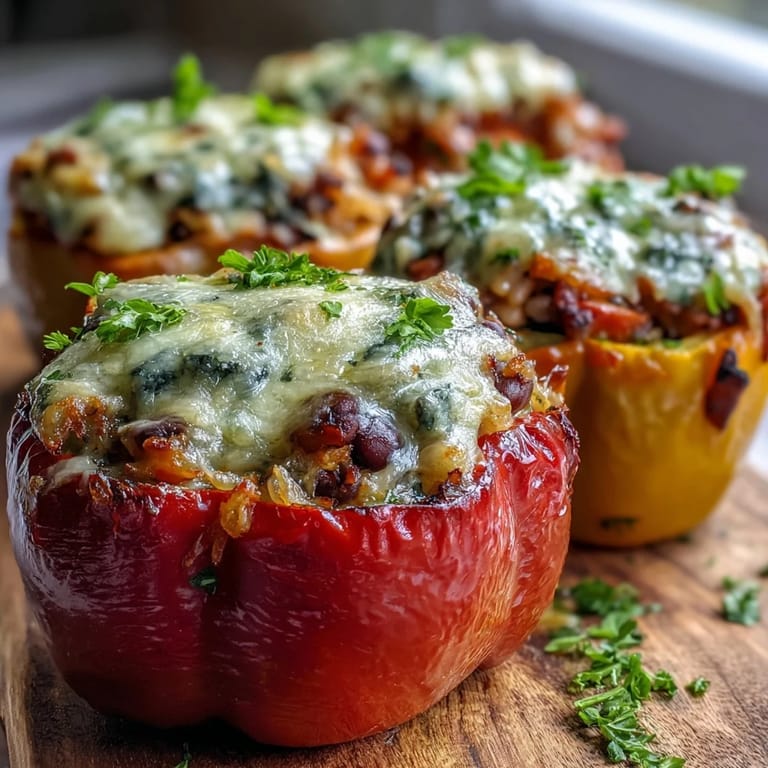
- Spoon the mixture into each pepper until it's generously filled but not overflowing, then top with cheese if you're using it. The peppers will shrink slightly as they bake, so don't worry if they look a little full right now.
- Create the steam:
- Pour vegetable broth into the bottom of your baking dish so it comes up about half an inch, then cover everything tightly with foil. This trapped steam is what keeps the peppers tender rather than collapsed.
- Two-stage bake:
- Start at 375°F covered for thirty minutes to gently cook the peppers through, then remove the foil and bake another ten minutes so the tops can brown and any cheese can bubble and golden. The peppers are done when a fork pierces the flesh easily but they're not so soft they've lost their shape.
 Save
Save These peppers became the dish my kids actually requested for dinner, which felt like winning some kind of parental lottery. There's something about food they helped fill that tastes like success to them, and watching them eat vegetables with genuine enthusiasm instead of resignation changed how I think about cooking for my family.
Making It Your Own
The beauty of this recipe is how forgiving it is with substitutions. I've added corn, diced tomatoes, and even some chopped jalapeños depending on what's in the fridge or what mood I'm in. One time I stirred in some crumbled tofu for extra protein and nobody even noticed it wasn't there for the texture alone. The filling is flexible enough to handle whatever additions appeal to you without losing its essential character.
Variations Worth Trying
If you want to take this in different directions, try swapping the black-eyed peas for chickpeas or lentils, or add some diced sweet potato to the vegetable mix for earthier sweetness. I've done a version with cilantro instead of parsley and lime zest stirred into the filling, which gives it a completely different personality. The spice ratio can shift too—less cayenne for families with young kids, or a whole teaspoon if you like actual heat in your food.
Serving and Storage Wisdom
These are genuinely good the day you make them, but they're also excellent the next day and even better reheated gently in a low oven with a little cover to keep them moist. I've found they freeze well too, so you can make a double batch and have them waiting for a busy weeknight when cooking feels like too much.
- Serve them with crusty bread and a simple green salad to round out the meal without overshadowing the stars.
- Leftover filling works beautifully stuffed into tomatoes or nestled into avocado halves for a completely different presentation.
- Room temperature peppers make surprisingly good lunch box food if you've got the container space, so don't assume they're only for dinner.
 Save
Save There's real joy in a dish that feeds you well, looks beautiful on the plate, and tastes like you actually care. These peppers do all three without demanding perfection or hours at the stove.
Recipe FAQs
- → Can I make these stuffed peppers ahead of time?
Yes, you can prepare the filling and hollow out the peppers up to a day in advance. Store them separately in the refrigerator. When ready to bake, fill the peppers and proceed with the baking instructions. You may need to add a few extra minutes to the baking time if starting from cold.
- → What can I use instead of black-eyed peas?
Black beans, kidney beans, or pinto beans work well as substitutes. Chickpeas also make a delicious alternative. Each bean will bring slightly different flavors and textures, but all complement the seasoning blend beautifully.
- → How do I know when the peppers are done baking?
The peppers are ready when they're tender when pierced with a knife and the skin has slightly wrinkled. The filling should be hot throughout, and any cheese on top should be melted and golden. This typically takes about 40 minutes total.
- → Can I freeze these stuffed peppers?
Absolutely! Let them cool completely, then wrap individually or place in an airtight container. Freeze for up to 3 months. Thaw overnight in the refrigerator and reheat in a 350°F oven until warmed through, about 20-25 minutes.
- → What other vegetables can I add to the filling?
Diced tomatoes, corn, zucchini, or spinach make excellent additions. Sauté them along with the onions and carrots. You can also add chopped mushrooms for extra umami flavor or jalapeños for more heat.
- → Is this dish spicy?
The cayenne pepper is optional and adds mild heat. Without it, the dish has a gentle warmth from the smoked paprika and black pepper. Adjust the cayenne or add hot sauce to suit your spice preference.