 Save
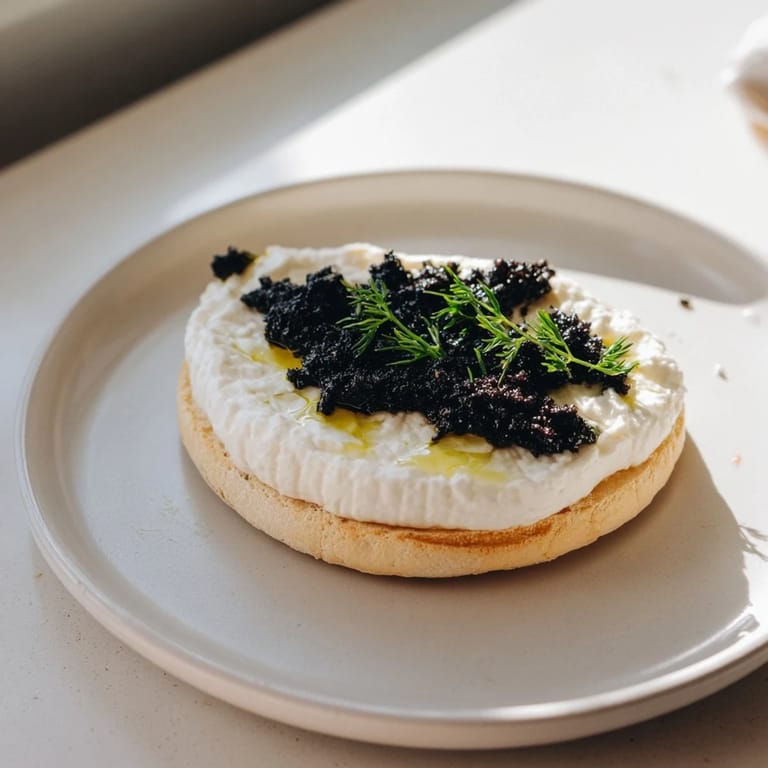
Save There's something about the first time you plate something that looks genuinely elegant that makes you pause. I was prepping for a dinner party—nothing fancy, just friends coming over—when I decided to stop arranging things haphazardly and actually think about what I was serving. That's when the idea hit: what if cheese could look like art? A simple oval of creamy white, topped with something dark and striking, almost like a silhouette you'd find on an old cameo brooch. Twenty minutes later, I had four little masterpieces that made my guests actually gasp before tasting them.
I still remember watching my mother-in-law take her first bite at that dinner. She said nothing for a second, just looked at the plate, then at me with this expression that somehow meant both "you made this?" and "I'm impressed." That's when I knew this little appetizer had legs. Now whenever someone asks me to bring something to a gathering, this is what I reach for—it's become my signature move without ever feeling tired.
Ingredients
- Fresh goat cheese or cream cheese (200 g): The blank canvas for your cameo—goat cheese gives you a slightly tangy edge that makes the olives sing, while cream cheese keeps things silky and neutral if you prefer.
- Black olive tapenade (80 g): This is your drama, your visual punch, and honestly the reason people remember this dish; don't skimp on quality here, or make it yourself if you're feeling ambitious.
- Rustic baguette or gluten-free crackers: Optional but recommended—they give you something to anchor the cheese to and make the whole thing feel more substantial.
- Fresh herbs like thyme or chives: Just a whisper of green to break up the black and white contrast and add a final note of freshness.
- Extra virgin olive oil: Not just for drizzling—a good one tastes like you actually know what you're doing.
Tired of Takeout? 🥡
Get 10 meals you can make faster than delivery arrives. Seriously.
One email. No spam. Unsubscribe anytime.
Instructions
- Shape your cheese into ovals:
- Scoop the cheese into four thick medallions, each about 2 cm tall, and place them on your serving plates or directly atop bread. You want them substantial enough to hold the tapenade without collapsing—think confident, not delicate.
- Create the cameo silhouette:
- Using the back of a spoon or a small spatula, spread a thin, deliberate layer of tapenade across each oval to create that striking dark profile. If you're feeling artistic, use a stencil or draw a freehand silhouette—the imperfection is part of the charm.
- Finish with oil and herbs:
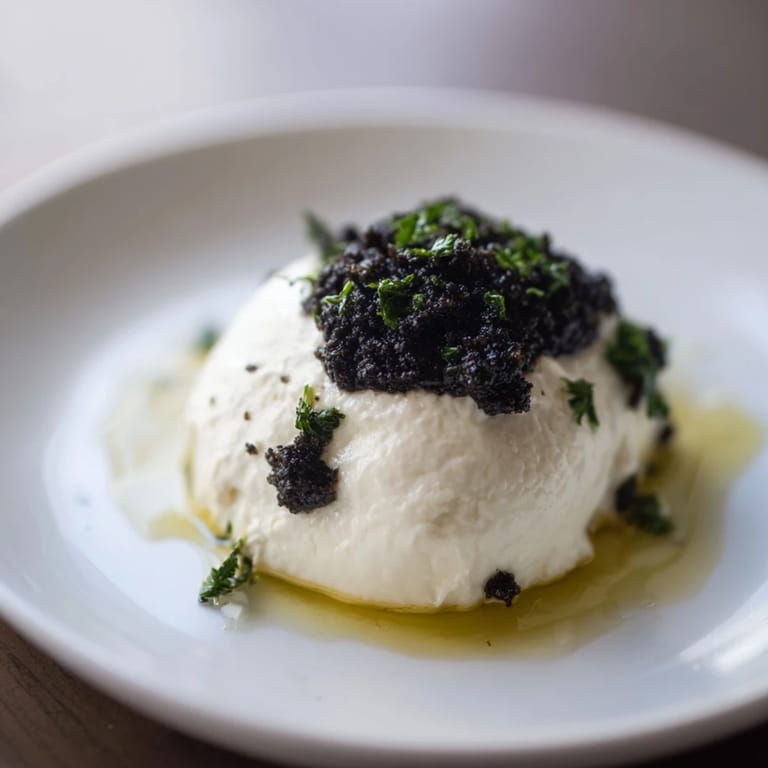
- Drizzle a little olive oil around (not on top of) each cameo, then sprinkle your herbs over everything for color and one final layer of flavor.
- Serve right away:
- Have extra bread or crackers on the side so people can build their own bites if they want, but honestly, these little cameos are perfect on their own.
 Save
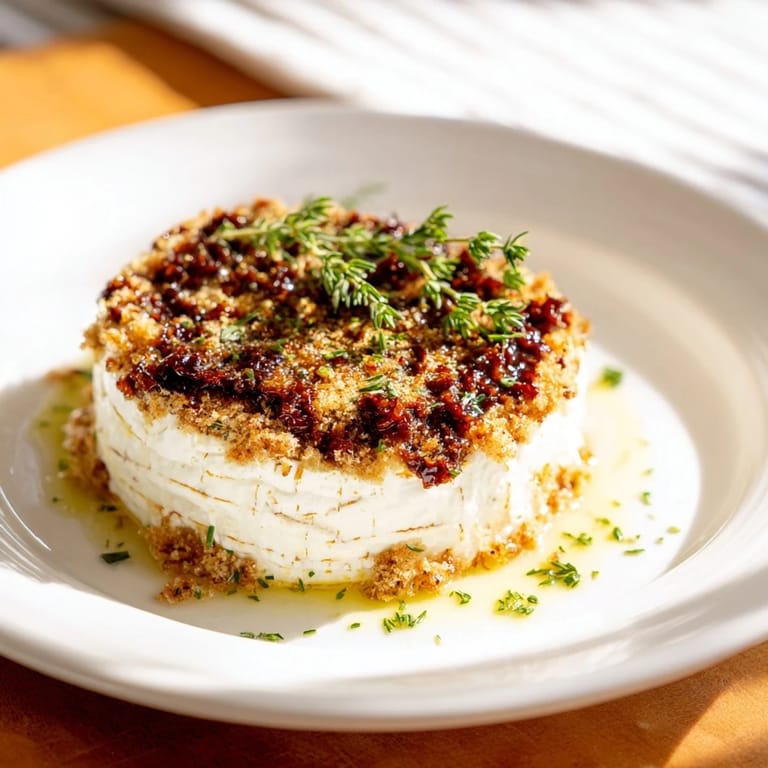
Save What I love most about this dish is watching people slow down before eating it. Everyone's in such a rush these days, but somehow a plate that actually looks intentional makes people pause and notice. That moment of appreciation, before the first taste, has become the real point.
The Art of Assembly
The magic of a cameo is in the restraint—you're not smothering the cheese; you're adorning it. The tapenade should be thin enough that you can still see the white cheese underneath, creating that high-contrast silhouette that makes the whole thing work. This is where the difference between "looks nice" and "looks like you spent hours" happens in about thirty seconds.
Playing with Variations
Once you understand the basic structure, you can improvise endlessly. I've done this with roasted red pepper spread, a bright green herb paste, even pomegranate molasses for something more dramatic. The key is choosing something with enough color contrast and flavor intensity to stand up against the creamy richness of the cheese. Some of my favorite experiments happened because I had leftover things in my fridge that seemed worth trying.
Serving and Pairing
These cameos live happily on a charcuterie board, as a passed appetizer at a cocktail party, or as part of a spread of small bites before dinner. A crisp Sauvignon Blanc or light Pinot Noir beside them makes everything feel effortless and intentional. If you're making homemade tapenade, do it an hour or two ahead so the flavors have time to meld and deepen.
- Keep your cheese and tapenade at room temperature for the smoothest application and best flavor.
- Make extra tapenade if you're making it homemade—it keeps well and tastes better the next day as the garlic settles in.
- You can assemble these up to two hours ahead and keep them covered in the fridge, but bring them to room temperature for five minutes before serving.
 Save
Save This dish proved to me that sometimes the most memorable moments at a table come from the smallest, most thoughtful touches. A little effort in presentation can turn something simple into something that stays with people.
Recipe FAQs
- → What type of cheese is best for this dish?
Fresh goat cheese (chèvre) or cream cheese provide a soft and creamy texture ideal for shaping into ovals.
- → Can the tapenade be store-bought?
Yes, quality store-bought black olive tapenade works well, though homemade versions enhance freshness and flavor.
- → How do I create the cameo effect with tapenade?
Using the back of a spoon or spatula, carefully spread a thin layer of tapenade on the cheese ovals, shaping a silhouette or decorative profile.
- → What garnishes complement this dish?
Fresh thyme or chives add herbal brightness, while a light drizzle of extra virgin olive oil enhances richness.
- → Are there gluten-free serving options?
Serve on gluten-free crackers or skip the base entirely to accommodate gluten-free preferences.
- → What wines pair well with this dish?
Crisp Sauvignon Blanc or a light Pinot Noir complement the creamy cheese and savory tapenade.