 Save
Save There's something about a bowl that just works—no fussy plating, no judgment, just honest food piled high and ready to eat. I discovered this particular combination on a Tuesday afternoon when my fridge was overflowing with vegetables I'd bought with good intentions and a half-empty container of quinoa that needed rescuing. The result was so satisfying that I've been making variations ever since, watching friends devour it straight from the bowl with the kind of focus usually reserved for their phones.
I made this for a group of friends with wildly different diets—omnivores, vegetarians, one person avoiding gluten—and everyone ate without modification or complaint. That's when I realized this bowl wasn't just convenient; it was genuinely delicious, built on flavors that work together rather than just coexisting on a plate.
Ingredients
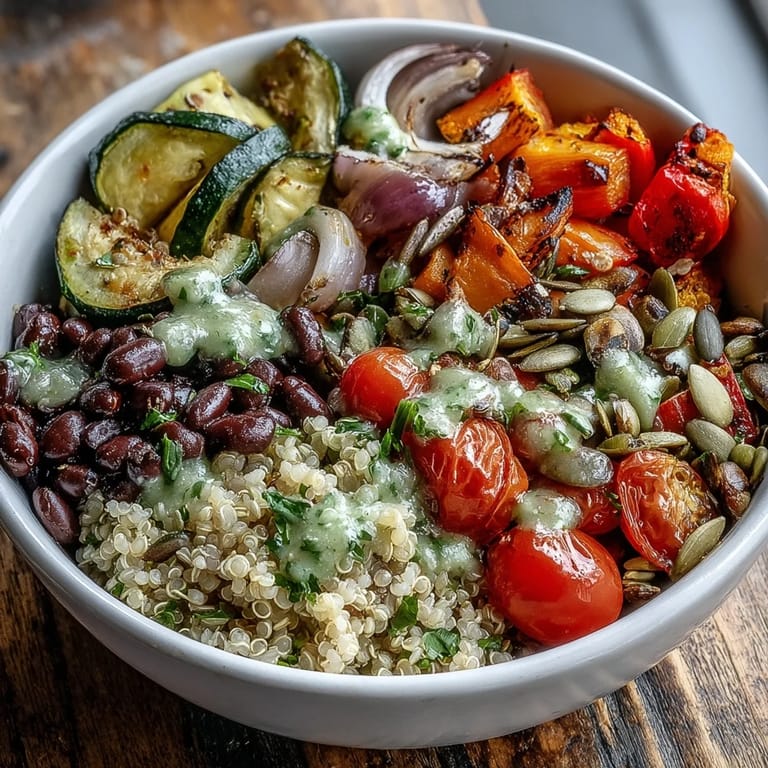
- Quinoa: This grain cooks up fluffy and absorbs the vinaigrette beautifully, plus it's a complete protein that keeps you satisfied for hours.
- Red bell pepper, zucchini, carrot, red onion, cherry tomatoes: The variety matters here—different vegetables bring different textures and colors, so don't feel locked in; swap seasonal vegetables based on what looks best at the market.
- Olive oil: Use regular olive oil for roasting (it handles heat better) and save the expensive extra virgin for the vinaigrette where you can actually taste its quality.
- Dried oregano: This simple herb ties the roasted vegetables together with a Mediterranean warmth that makes the whole bowl feel intentional.
- Black beans or chickpeas: Either works, though chickpeas give you a slightly nuttier, firmer bite that holds up beautifully to the vinaigrette.
- Roasted almonds or walnuts, pumpkin seeds: The nuts add richness and crunch; the seeds bring a subtle earthiness that surprised me the first time I tried them here.
- Extra virgin olive oil, fresh lemon juice, Dijon mustard, maple syrup, garlic: This vinaigrette is where the bowl gets its personality—the mustard adds depth, the maple syrup balances the acidity, and fresh lemon juice makes everything taste brighter than you'd expect.
Tired of Takeout? 🥡
Get 10 meals you can make faster than delivery arrives. Seriously.
One email. No spam. Unsubscribe anytime.
Instructions
- Heat your oven and prep the vegetables:
- Get the oven to 425°F and while it's preheating, dice and slice your vegetables into roughly similar-sized pieces so they cook evenly. Toss them with olive oil, oregano, salt, and pepper until everything glistens.
- Roast until caramelized:
- Spread the vegetables on a baking sheet in a single layer and roast for 20 to 25 minutes, stirring halfway through. You're looking for the edges to turn golden and slightly crispy—this is where the magic happens.
- Cook the quinoa gently:
- While vegetables roast, rinse your quinoa under cold water (this removes a bitter coating that most people have stopped bothering with but I still do). Combine with water or broth in a saucepan, bring to a boil, then immediately lower the heat and cover.
- Let quinoa rest and fluff:
- After 15 minutes of simmering, turn off the heat but keep the lid on for 5 more minutes—this finishing step makes the quinoa so much lighter and fluffier. Fluff with a fork before assembling.
- Make the vinaigrette quickly:
- In a small bowl, whisk together olive oil, lemon juice, mustard, maple syrup, and minced garlic. Taste it and adjust seasoning; this should taste bright and slightly tangy, not bland.
- Assemble with intention:
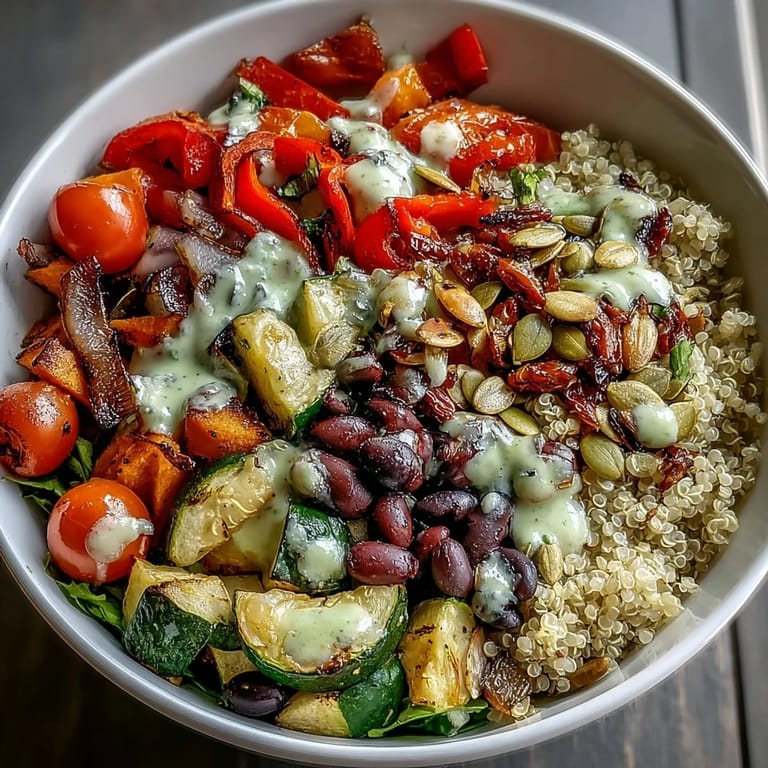
- Divide cooked quinoa among four bowls, then layer on the roasted vegetables, beans, nuts, and seeds. Drizzle generously with vinaigrette—don't be shy, the liquid brings everything together.
- Serve or store strategically:
- If eating immediately, the bowl is warm and the vegetables are soft. If making ahead, store components separately and assemble just before eating so the nuts stay crunchy.
 Save
Save I brought this bowl to a potluck once where someone asked for the recipe before even finishing their serving, and I realized that the combination of warm and cool, crunchy and soft, earthy and bright had created something that felt both nourishing and genuinely craveable. That's when I stopped thinking of it as a healthy bowl and started thinking of it as simply good food.
The Secret to Caramelized Vegetables
The difference between roasted vegetables that taste like obligation and ones that taste like a choice comes down to two things: don't crowd the pan, and actually let them sit on the hot sheet long enough to brown. I learned this by over-loading a baking sheet and ending up with steamed vegetables that tasted vaguely sad. Now I give them space and patience, and the oven does the real work.
Building Flavor Layers
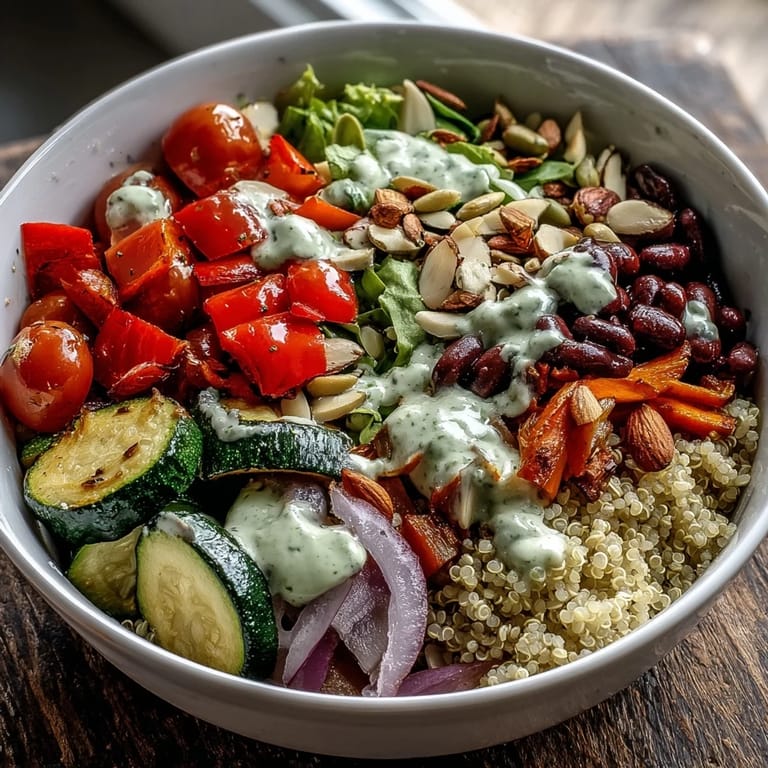
This bowl works because nothing is competing for attention—each component brings something different. The quinoa is neutral and absorbent, the roasted vegetables are sweet and slightly caramelized, the beans provide earthiness and protein, the nuts add richness, and the vinaigrette ties it all together with brightness and acidity. I've found that when building grain bowls, thinking about contrast matters more than thinking about nutrition.
Make It Your Own
The beauty of this format is that it's genuinely adaptable without falling apart. Use whatever vegetables are in season or on sale, swap the beans based on what you have, or add grilled tofu if you want more protein. I've made this bowl in summer with raw corn and cucumber, in fall with roasted sweet potato and kale, and it's always tasted like exactly what I needed to eat.
- Don't skip the vinaigrette—it's the thing that transforms separate ingredients into an actual dish.
- Prep components ahead on busy nights but assemble just before eating so nuts and seeds stay crunchy.
- A poached egg or crumbled feta can elevate this from side-dish energy to something more substantial.
 Save
Save This bowl has become my answer to the question "what should I make for dinner" on nights when I want something nourishing but not complicated. It's a reminder that feeding yourself well doesn't require elaborate techniques or hard-to-find ingredients—just good components and the willingness to let flavors do their thing.
Recipe FAQs
- → Can I make this bowl ahead of time?
Absolutely. The quinoa and roasted vegetables store well in the refrigerator for up to 4 days. Keep the vinaigrette separate and add it just before serving to maintain freshness.
- → What vegetables work best in this bowl?
While the original calls for bell pepper, zucchini, carrot, and onion, you can easily swap in sweet potato, broccoli, cauliflower, or any seasonal vegetables that roast well together.
- → How can I add more protein?
Grilled tofu, poached eggs, or even grilled chicken make excellent protein additions. The bowl already provides 13g per serving from quinoa and beans, but these options bump it up significantly.
- → Is this bowl gluten-free?
Yes, when made with vegetable broth instead of store-bought broth that might contain gluten additives. Always check labels on canned beans and broth to be certain.
- → Can I make it vegan?
Simply substitute maple syrup for the honey in the vinaigrette. Everything else in the bowl is naturally plant-based and vegan-friendly.
- → What if I have a nut allergy?
Omit the almonds or walnuts entirely and increase the pumpkin seeds, or add sunflower seeds instead. The bowl remains delicious and crunchy without nuts.