 Save
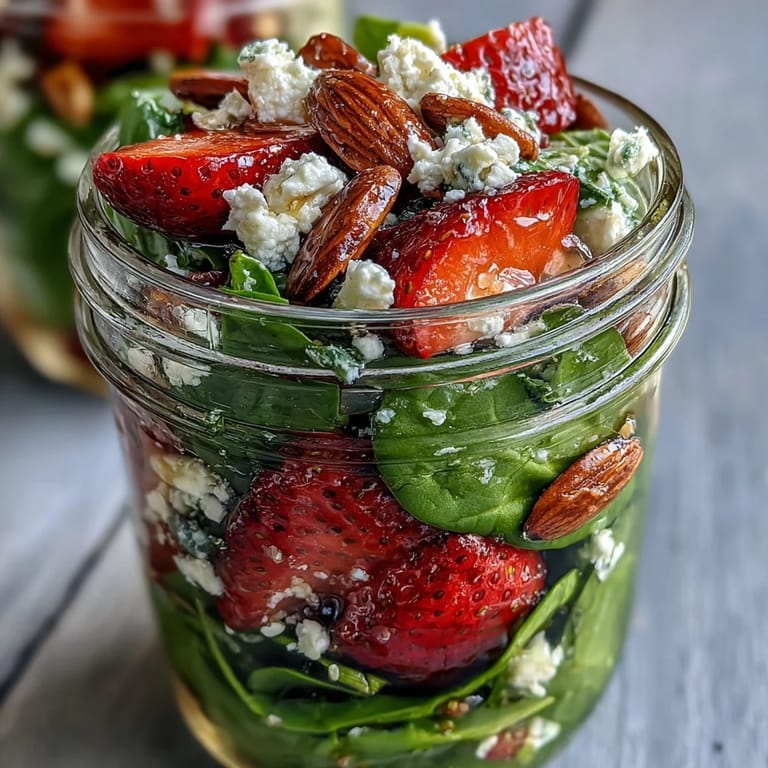
Save There's something wonderfully efficient about assembling these mason jar salads on a Sunday afternoon—the kind of task that feels more like play than prep work. I discovered this layering method by accident when I was rushing to pack lunch and realized that dressing at the bottom meant the spinach stayed crisp all week. Now, whenever I line up four jars on the counter, I'm struck by how something so simple to make becomes such a joy to eat days later.
I made these for a friend who was starting a new job and mentioned dreading sad desk lunches. Watching her face light up when she opened that jar at lunch and the strawberries caught the light—that was the moment I realized meal prep doesn't have to feel like punishment.
Ingredients
- Balsamic vinegar: This is where the depth lives; don't reach for the cheap stuff if you can help it, as aged vinegar tastes noticeably richer and less harsh.
- Honey or maple syrup: A touch of sweetness balances the vinegar's tang and helps the dressing emulsify beautifully.
- Dijon mustard: Just a teaspoon acts as an invisible thickener and adds subtle complexity that makes people ask what your secret ingredient is.
- Garlic clove: Mince it fine so it distributes evenly throughout the vinaigrette rather than leaving little sharp bites.
- Extra-virgin olive oil: The quality matters here since it's not being cooked; I use one I actually enjoy tasting on bread.
- Baby spinach: Make sure it's thoroughly dried or the salad will weep moisture into the dressing; pat it gently with paper towels.
- Strawberries: Pick ones that are fragrant and give slightly to pressure; mealy berries won't improve over the week.
- Cooked quinoa or farro: These grains absorb the vinaigrette and turn the salad into something actually filling for lunch.
- Red onion: Slicing it thin and placing it near the dressing softens its bite slightly while keeping it crunchy.
- Feta or goat cheese: Crumbling it by hand rather than using pre-crumbled gives you better texture and flavor distribution.
- Toasted almonds: Toasting them yourself (even in a dry skillet for five minutes) brings out a nuttiness that changes everything.
- Cucumber: Dice it small so it mingles with other ingredients rather than sitting as large chunks.
Tired of Takeout? 🥡
Get 10 meals you can make faster than delivery arrives. Seriously.
One email. No spam. Unsubscribe anytime.
Instructions
- Make the vinaigrette first:
- Whisk balsamic vinegar with honey, mustard, garlic, salt, and pepper in a small bowl until combined. Slowly drizzle in olive oil while whisking constantly, and you'll feel the mixture become silky and thickened—that's emulsification happening and it's satisfying to watch.
- Dress the bottom of each jar:
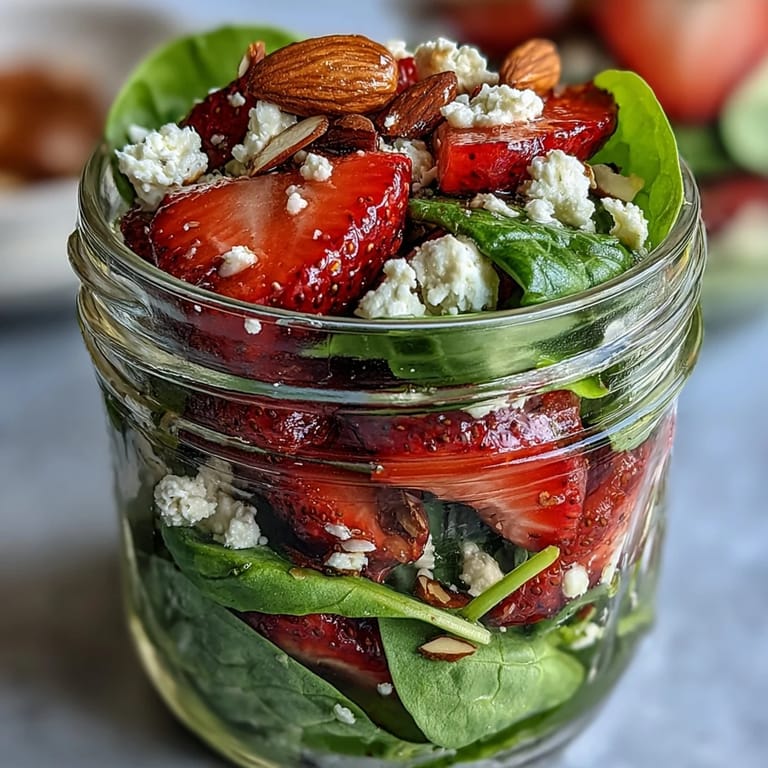
- Pour 2 to 3 tablespoons of vinaigrette into the base of each mason jar; this is your insurance policy against soggy greens.
- Layer the sturdy vegetables:
- Add red onion slices, then cucumber and cooked grains if using, directly onto the dressing where they'll absorb flavor without turning mushy.
- Add the delicate layers:
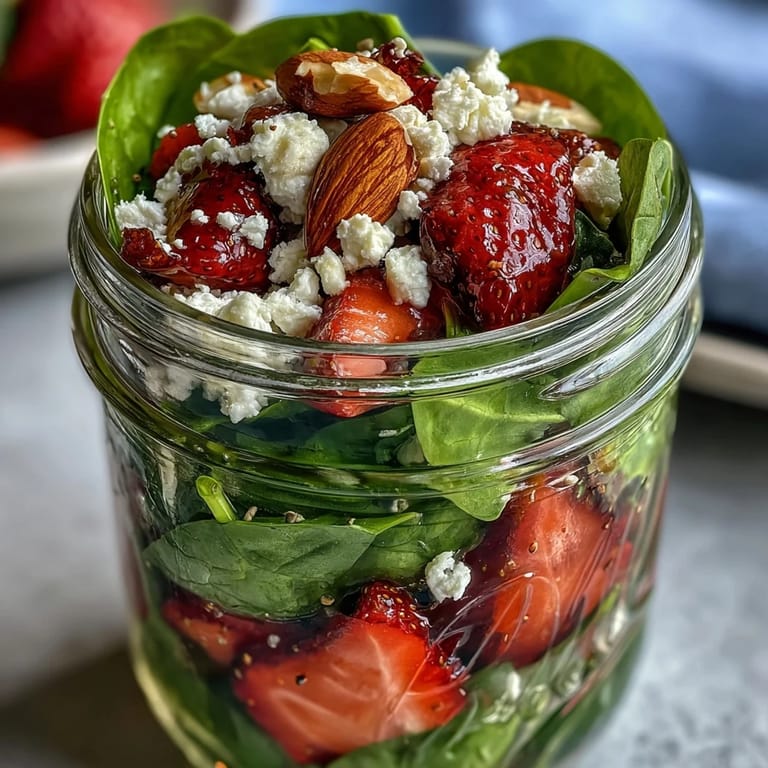
- Layer strawberries next, followed by crumbled cheese and toasted almonds, which stay crunchy better when separated from the dressing by the grains.
- Top with greens:
- Finish with a generous handful of baby spinach on top, pressing it down gently so the lid closes securely.
- Seal and refrigerate:
- Cap the jars tightly and refrigerate until you're ready to eat; shake vigorously before serving or pour into a bowl for a more composed presentation.
 Save
Save My partner grabbed one of these jars on his way to a long drive without asking, and I found him two hours later happily shaking it in a parking lot before eating it. That's when I knew I'd created something genuinely useful.
The Magic of Layering
Once you understand why each ingredient sits where it does, you stop thinking of this as a recipe and start thinking of it as a principle. The dressing lives at the bottom because that's where it can be most effective; the grains act as a buffer zone protecting the delicate spinach from getting waterlogged; and the crunchy elements stay on top where they stay crunchy. It's the same logic that keeps a sandwich from falling apart.
Making It Your Own
The beauty of these jars is how willing they are to bend to whatever you have on hand. I've made them with spring peas instead of strawberries, with walnuts instead of almonds, with goat cheese instead of feta. The framework stays solid; the details dance around. Some weeks I add grilled chicken strips for my meat-eating friends, other weeks I pack extra quinoa for those wanting something more substantial.
Storage and Serving Suggestions
These salads genuinely keep for five days sealed in the refrigerator, though they're best eaten between day two and day four when everything has marinated together but still maintains texture. Shake the jar hard just before eating to redistribute the dressing, or pour everything into a bowl if you prefer a more traditional presentation. Some people eat straight from the jar with a fork while standing at the kitchen counter, and I won't judge because I've definitely done that too.
- For a vegan version, use maple syrup and swap the cheese for a plant-based alternative or nutritional yeast.
- Grilled chicken, chickpeas, or hard-boiled eggs turn these into satisfying main-course lunches rather than side salads.
- Make the vinaigrette in a separate jar and shake it vigorously before pouring if you prefer a fresher taste rather than everything pre-marinating.
 Save
Save These jars have become my answer to the question of how to eat well when life gets busy. There's real comfort in knowing lunch is already waiting in the refrigerator, dressed and ready to go.
Recipe FAQs
- → How do I keep the greens fresh in the jar?
Layer vinaigrette at the bottom and keep spinach at the top to prevent sogginess until ready to eat.
- → Can I substitute almonds with other nuts or seeds?
Yes, toasted pecans, walnuts, or sunflower seeds work well as alternatives depending on preference or allergies.
- → Is it necessary to add cooked grains like quinoa or farro?
No, grains are optional but add protein and texture when included in the salad layers.
- → How long can the mason jar salad be stored?
When refrigerated with a tight seal, it stays fresh for up to 3 days, ideal for meal prepping.
- → What dressing ingredients balance the sweetness of strawberries?
The balsamic vinaigrette’s honey or maple syrup and Dijon mustard provide a tangy-sweet contrast enhancing the fruit’s flavor.