 Save
Save There's something almost magical about the moment you drop fresh seafood into a simmering tomato sauce and watch the kitchen transform. Years ago, a friend visiting from Naples made this dish in my kitchen, and I watched her move through each step with such ease that I thought I'd never pull it off myself. But the secret, she told me between tastes of the sauce, was letting the tomatoes and garlic do their work first, then trusting the seafood to know when it was done. That meal changed how I thought about pasta entirely.
I remember the first time I attempted this without the guidance of my Neapolitan friend, and I overcooked the squid into rubber while obsessing over whether the mussels would open. My partner took one bite and asked what happened, and I laughed so hard I nearly cried because it was terrible. But that failure taught me something precious: the timing window is smaller than you think, and that's actually beautiful because it means you can't rush this dish. Now when it works, it tastes like a small victory.
Ingredients
- Large shrimp, peeled and deveined (200 g): Buy them the day you're cooking if possible; they should smell briny and ocean-fresh, never fishy or ammonia-like.
- Mussels, cleaned and debearded (200 g): Run them under cold water just before cooking and discard any that are cracked or already open.
- Squid rings (150 g): The key to tender squid is cooking it briefly or braising it long; there's no in-between, so watch the clock.
- Sea scallops (150 g): Pat them completely dry with paper towels before the pan or they'll steam instead of sear.
- Spaghetti or linguine (350 g): Save at least half a cup of the pasta water before you drain it because that starchy liquid is your sauce's best friend.
- Olive oil (2 tbsp): Use a robust extra-virgin that can handle heat without becoming bitter.
- Small onion, finely chopped: The smaller you chop it, the better it melts into the sauce and disappears.
- Garlic cloves, minced (3): Fresh garlic makes a noticeable difference; don't substitute the jarred version.
- Red pepper flakes (1/2 tsp, optional): This is where you adjust the heat to your taste, and it's optional because some people prefer letting the seafood be the star.
- Canned crushed tomatoes (800 g): Look for San Marzano if your budget allows; they have fewer seeds and a sweeter flavor.
- Tomato paste (2 tbsp): A small spoonful of this concentrated depth changes everything about the sauce.
- Dry white wine (100 ml): Something you'd actually drink, because cooking with wine you wouldn't want to taste is a waste.
- Dried oregano and basil (1 tsp each): Mediterranean herbs that have been drying in Italian kitchens for centuries for a reason.
- Sugar (1/2 tsp): Just enough to balance acidity from the tomatoes without anyone tasting sweetness.
- Sea salt and freshly ground black pepper: Season in layers, not all at the end.
- Fresh parsley, chopped (2 tbsp): Chop it just before serving so it stays bright green and herbaceous.
- Lemon wedges: A squeeze at the table brings everything into focus.
Tired of Takeout? 🥡
Get 10 meals you can make faster than delivery arrives. Seriously.
One email. No spam. Unsubscribe anytime.
Instructions
- Set the pasta water to boil:
- Fill a large pot with water, salt it generously so it tastes like the sea, and bring it to a rolling boil while you prep everything else. Having boiling water ready means you're never waiting around with raw seafood sitting out.
- Build the sauce foundation:
- Warm olive oil in your largest skillet over medium heat, then add the finely chopped onion and let it soften into translucent pieces for two to three minutes. You're not rushing this; the slower the onion mellows, the sweeter the sauce becomes.
- Wake up the garlic:
- Once the onion is soft, stir in minced garlic and red pepper flakes if using, cooking for just one minute until the kitchen smells like a coastal Italian village. One minute is the line between fragrant and burnt, so stay close.
- Deglaze with wine:
- Pour in the dry white wine and let it bubble away for two minutes, simmering down slightly and tasting a little less sharp. This step is calming somehow, watching the wine marry with the hot pan.
- Add the tomato base:
- Stir in crushed tomatoes, tomato paste, oregano, basil, sugar, salt, and pepper all at once, then let everything simmer uncovered for ten minutes with occasional stirring. The sauce will deepen in color and the flavors will start recognizing each other.
- Time the pasta:
- Drop the pasta into your boiling salted water and cook according to package instructions until al dente, then drain and reserve at least half a cup of the starchy cooking water. This timing usually works out so the pasta finishes right around when the sauce is ready for seafood.
- Introduce the seafood thoughtfully:
- Start with squid rings and scallops, simmering them for two minutes, then add shrimp and mussels, cover the skillet, and cook for three to four minutes until shrimp turn pink and mussels crack open. Discard any mussels that stubbornly refuse to open; they're telling you something.
- Marry pasta and sauce:
- Add the drained pasta directly to the skillet with the seafood and sauce, tossing gently to coat everything evenly. If the mixture looks tight or dry, splash in some of that reserved pasta water until you reach a silky consistency.
- Taste and adjust:
- Try a bite before serving and adjust salt, pepper, or a squeeze of lemon juice if needed. Seasoning at the end makes a difference no one can identify but everyone notices.
- Plate and garnish:
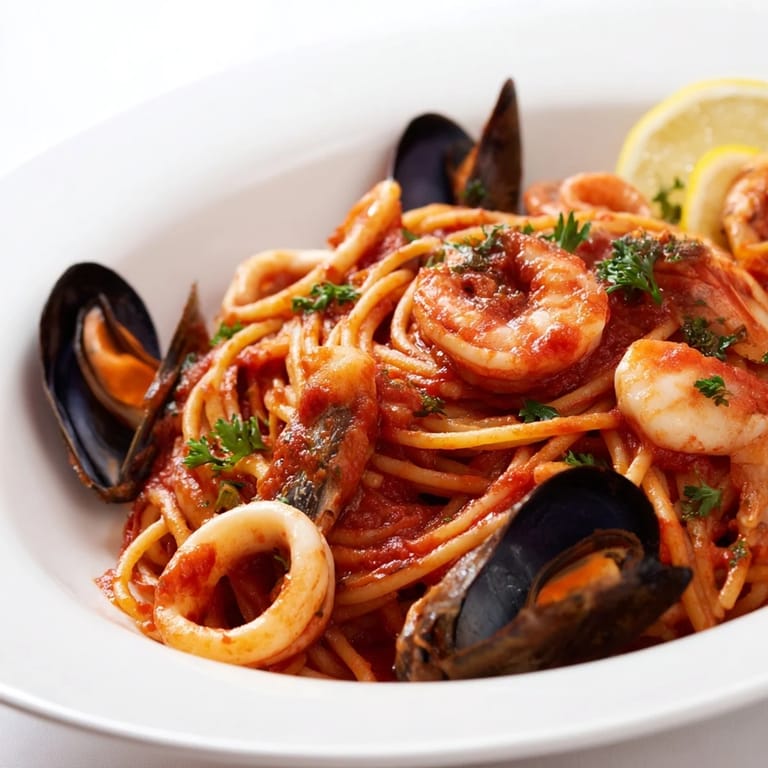
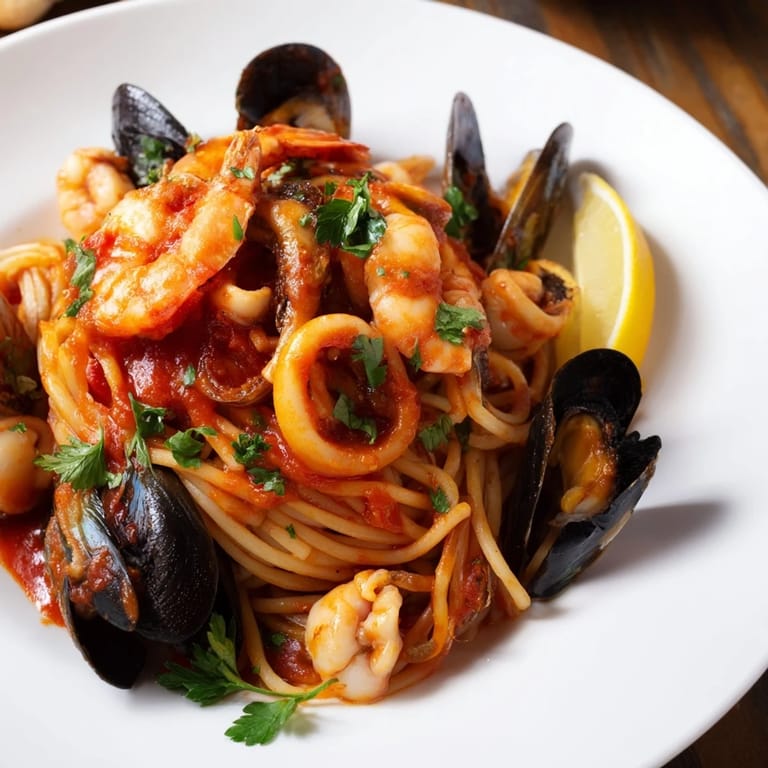
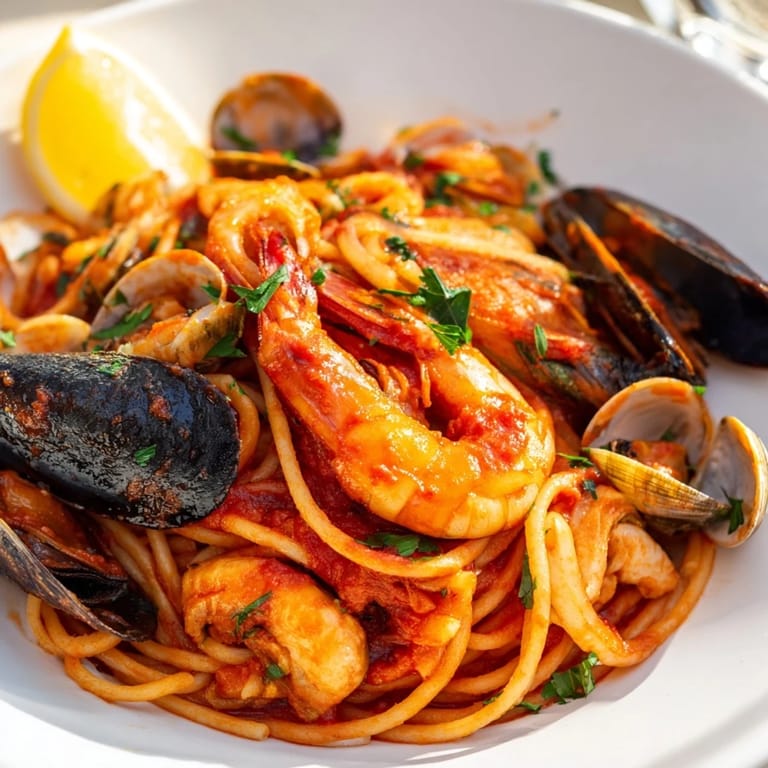
- Divide among four bowls, scatter fresh parsley over each serving, and set lemon wedges on the side for people to squeeze as they wish. Serve immediately while everything is still warm.
 Save
Save One evening, I made this for my sister who had been going through a rough patch, and halfway through eating she looked up with tears in her eyes and said it tasted like hope. That's when I understood that this isn't fancy restaurant food that shows off technique; it's generous, honest cooking that says someone cared enough to stand at the stove and pay attention.
Choosing Your Seafood
The seafood you choose determines the personality of the dish more than anything else. Large shrimp give you sweetness and a firm bite, while mussels add brininess and create drama as they open. Squid brings a subtle chewiness that catches people off guard in the best way, and scallops add an almost luxurious tenderness. If you can't find one of these, swap it for something similar in texture and cooking time rather than trying to substitute with a firm white fish that behaves completely differently. The combination of four different textures and flavors is what makes this dish sing.
The Sauce Philosophy
The sauce isn't meant to be thick or heavy; it should coat the pasta and seafood in a silky embrace that tastes like concentrated tomato and garlic, not reduced down to something pasty. This is why the reserved pasta water matters so much. That starchy liquid isn't a hack; it's how Italian cooks have been finishing pasta for generations, turning a thin sauce into one that clings and carries flavor. Some people add cream, but I find it unnecessary and dulls the brightness of the tomatoes and lemon that make this dish feel alive.
Timing and Service
This dish refuses to wait, and that's part of its charm. Cook it at the moment you're ready to eat because seafood marinara pasta tastes like summer caught on a plate, and that magic fades the second it sits. Set the table before you start the pasta water so nothing gets cold while you're hunting for napkins. If you're cooking for guests, let them know you'll be about forty-five minutes from start to finish so they arrive hungry and ready to eat immediately.
- Use the largest skillet you own so the seafood doesn't overcrowd and steam instead of cook.
- Taste the sauce before adding seafood because once those proteins go in, you won't have as much freedom to adjust seasoning.
- Have lemon wedges at every place setting because the acidity transforms the whole experience in the final moment.
 Save
Save Make this dish when you want to feel like you've traveled to the Mediterranean without leaving your kitchen. It's one of those rare recipes that tastes difficult but treats you kindly if you stay present.
Recipe FAQs
- → What type of seafood works best in this dish?
Large shrimp, mussels, squid rings, and scallops create a balanced medley that cooks evenly and imparts rich ocean flavors.
- → How can I ensure the pasta is cooked perfectly?
Cook spaghetti or linguine in salted boiling water until al dente, then drain while reserving some pasta water to adjust sauce consistency.
- → What herbs enhance the tomato sauce?
Dried oregano and basil add classic Italian notes, complemented by garlic and a touch of red pepper flakes for subtle heat.
- → Can I substitute the seafood with other ingredients?
Yes, firm white fish or clams can be used as alternatives, adjusting cooking times accordingly to maintain texture.
- → How does the white wine affect the sauce?
The dry white wine adds acidity and depth, balancing the sweetness of tomatoes and enriching the sauce’s overall flavor.