 Save
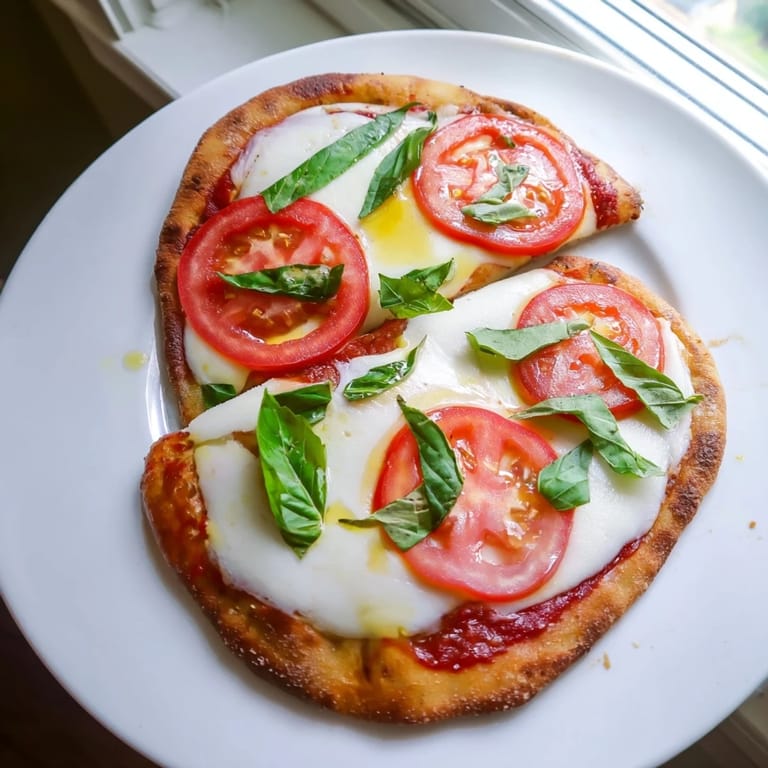
Save The first time I made pizza on naan, I wasn't trying to be clever—I was just hungry and short on time. My regular pizza dough wasn't ready, but there was naan in the freezer, and suddenly I was spreading tomato sauce on it like I'd discovered some secret hack. Eight minutes later, golden edges curling slightly, cheese bubbling like liquid velvet, and basil catching the heat just enough to release its perfume—I realized I'd stumbled onto something that felt less like a shortcut and more like its own complete thing.
I made these for my sister on a lazy Sunday afternoon when she stopped by unannounced, and she ate two slices before I'd even finished plating mine. That's when I knew it wasn't just convenient—it was actually delicious in a way that mattered.
Ingredients
- Naan breads: The foundation changes everything—naan brings a subtle sweetness and that signature chew that transforms this from a quick dinner into something special, especially if you find them still warm at the bakery section.
- Tomato passata or pizza sauce: Passata is smoother and silkier than crushed tomatoes, so it spreads without dragging the naan, and the flavor stays bright rather than heavy.
- Oregano, salt, pepper: These three make the sauce taste intentional; dried oregano is stronger than fresh here, which matters when you're working with such a short cooking time.
- Fresh mozzarella: This is non-negotiable—it melts into those small pools of richness that make each bite memorable, and it actually stays creamy instead of turning rubbery.
- Ripe tomato: Slice it thin so it doesn't weigh down the naan, and taste it first to make sure it's actually sweet; a mealy tomato will disappoint you here.
- Fresh basil leaves: Add them after baking so they stay vibrant and fragrant; this isn't negotiable if you want the dish to taste like summer.
- Extra virgin olive oil: The final drizzle is where olive oil earns its place—it adds a finish that feels intentional and ties everything together.
Tired of Takeout? 🥡
Get 10 meals you can make faster than delivery arrives. Seriously.
One email. No spam. Unsubscribe anytime.
Instructions
- Heat your oven and prepare your stage:
- Set the oven to 220°C (425°F) and line a baking sheet with parchment paper—this prevents sticking and lets the naan's bottom cook evenly without burning. You want everything ready before you touch the naan, because once you start assembling, you're working against the clock.
- Build your sauce quietly:
- In a small bowl, stir tomato passata with oregano, salt, and pepper until it looks unified and smells like actual pizza. Taste it and adjust; this simple sauce is the entire flavor bridge between naan and toppings.
- Spread with intention:
- Place naan on the baking sheet and spread sauce evenly, leaving about a half-inch border—this edge becomes your handle and stays crispy while everything else transforms. Don't oversaturate; you want the sauce to flavor the naan, not soak through it.
- Layer without overthinking:
- Scatter mozzarella slices and tomato slices over the sauce, spacing them so every bite gets both. The cheese doesn't need to cover every millimeter; gaps let the sauce's flavors shine through.
- Watch the oven carefully:
- Bake for 8 to 10 minutes, keeping an eye after minute 7—you're looking for cheese that's actively bubbling and naan edges that have turned golden. This is the moment that separates a soggy flatbread from something that tastes professionally made.
- Finish like you mean it:
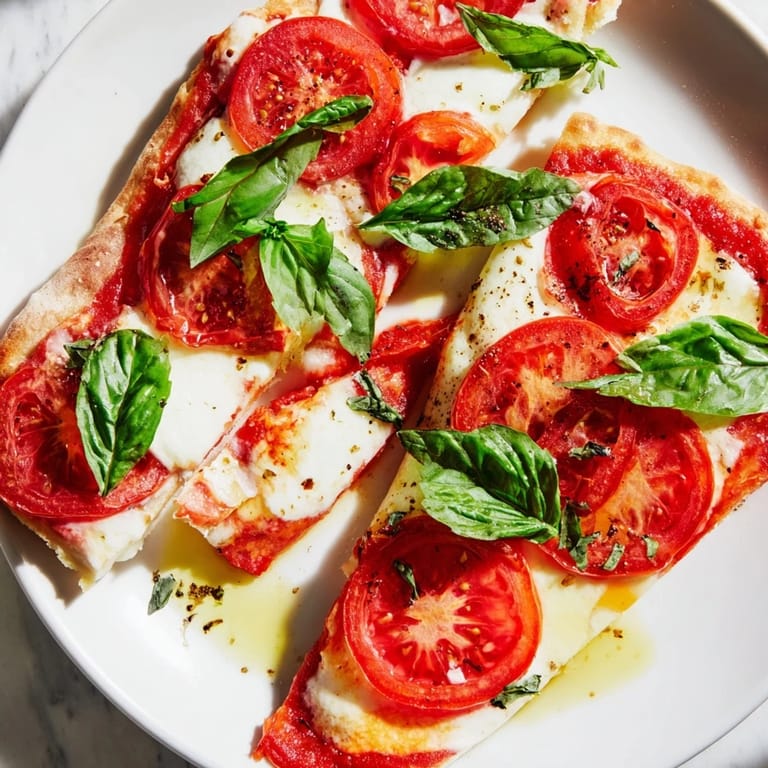
- Remove from the oven, drizzle with olive oil, scatter fresh basil across the top, and slice while everything is still hot. Serve immediately and watch people understand why this works so well.
 Save
Save What surprised me most was how this became the dish I'd make when someone I cared about was having a rough day, because it proved that something made in 15 minutes could still taste like you'd put real thought into it. That matters in ways that have nothing to do with cooking time.
The Naan Question
Choosing the right naan makes the difference between good and memorable. Plain naan lets the toppings be the star, while garlic naan adds an extra layer of flavor that honestly works beautifully here. Some people swear by naan that's been warmed slightly first, which helps it cook more evenly and prevents the bottom from crisping too fast before the cheese finishes melting.
Why This Works as Fusion
Italian Margherita pizza has always been about simplicity and quality ingredients—tomato, mozzarella, basil—and naan respects that philosophy while adding its own character. The flatbread's slight sweetness doesn't fight the fresh basil; instead, it creates a subtle depth that makes you pause between bites. This isn't trying to be either cuisine; it's genuinely both.
Making It Your Own
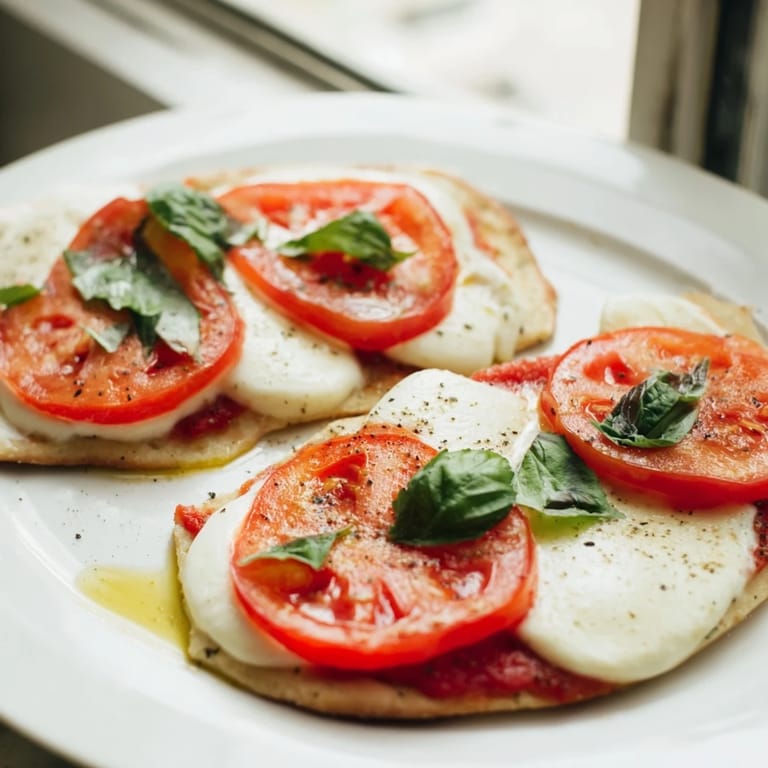
The beauty of this recipe is that it's a framework, not a rule. I've made it with roasted vegetables tucked under the cheese, with a scatter of chili flakes that add heat without overwhelming, and once with caramelized onions that transformed it into something entirely different. The speed stays the same, but the flavor can shift based on what you have or what you're craving.
- Add a pinch of chili flakes before baking if you want subtle heat that lingers.
- Try a thin smear of pesto under the passata if you want a green note running through every bite.
- Roast thick tomato slices separately if you want them concentrated and sweet rather than watery.
 Save
Save This pizza exists because sometimes the best meals are born from the moment when you stop thinking and start cooking. It's become the dish I reach for when I want something that tastes intentional but feels effortless.
Recipe FAQs
- → What type of bread works best as the base?
Plain or garlic naan breads provide a crisp yet chewy foundation, ideal for holding the toppings and baking evenly.
- → Can I use fresh tomatoes instead of passata?
Yes, thinly sliced ripe tomatoes supplement the sauce and add freshness, complementing the mozzarella and basil.
- → How long should the flatbread bake?
Bake at 220°C (425°F) for 8–10 minutes until the cheese bubbles and the edges turn golden.
- → What are some good flavor variations?
Add chili flakes for heat, sprinkle grated Parmesan before baking, or include roasted vegetables for extra depth.
- → Is extra virgin olive oil necessary?
Drizzling extra virgin olive oil after baking enhances flavor and adds a subtle richness to the finished flatbread.