 Save
Save My neighbor Maria handed me a basket of zucchini over the fence one Saturday morning, more than any reasonable person could use in a week. I stood there staring at them, then at the bell peppers and tomatoes crowding my own counter, and suddenly this dish made perfect sense. It wasn't about following a recipe, it was about not letting good food go to waste. That first batch turned into something I now make whenever the farmers market leaves me with more vegetables than plan.
I made this for a group of friends who claimed they didn't like vegetables, and watched them go back for seconds without a word. One of them finally looked up and asked what I did to make everything taste so good. Honestly, it was just olive oil, heat, and not overthinking it. Sometimes the simplest techniques do the heaviest lifting, and roasting vegetables until their edges char just slightly is one of those tricks that changes everything.
Ingredients
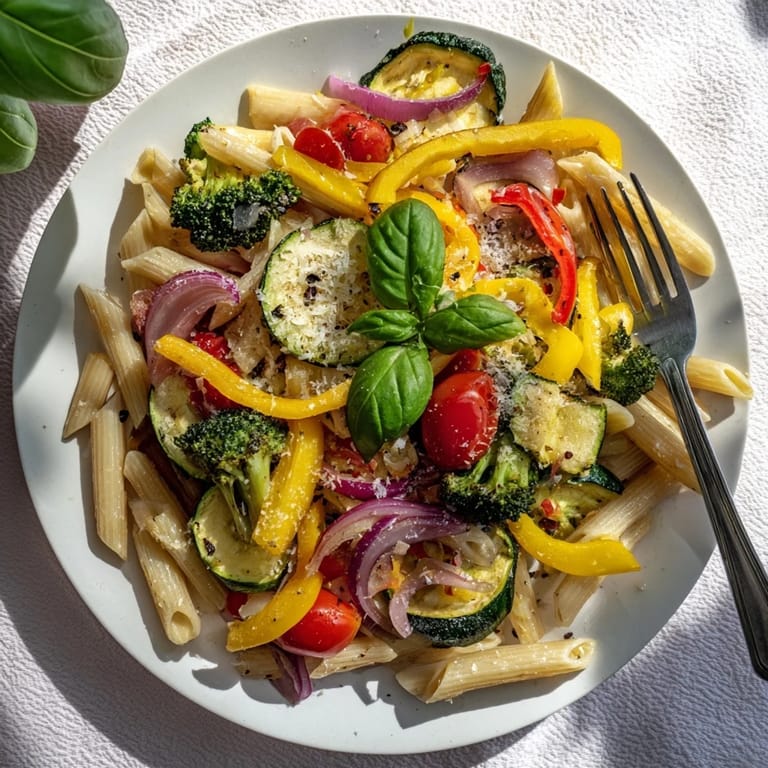
- Penne or fusilli pasta: The ridges and curves catch the olive oil and little bits of roasted vegetable, making every bite cohesive instead of slippery.
- Zucchini and yellow squash: These cook down soft and sweet, adding tenderness to contrast the firmer vegetables.
- Red and yellow bell peppers: Roasting them brings out a smoky sweetness that raw peppers just don't have.
- Red onion: It caramelizes beautifully in the oven and adds a slight sharpness that balances the sweeter vegetables.
- Cherry tomatoes: They burst in the heat and create little pockets of concentrated flavor throughout the dish.
- Broccoli florets: The edges get crispy and nutty, which is reason enough to include them every single time.
- Extra virgin olive oil: Use the good stuff here, it's the backbone of the whole dish and you'll taste the difference.
- Garlic: Sautéed just until fragrant, it adds warmth without overpowering the vegetables.
- Italian herbs: Dried works perfectly fine and adds that familiar comfort of Italian cooking without needing fresh.
- Salt, black pepper, and red pepper flakes: Simple seasoning that lets the vegetables speak for themselves, with a little heat if you want it.
- Parmesan cheese: Freshly grated melts into the pasta and adds a salty, nutty richness that ties everything together.
- Fresh basil or parsley: A handful at the end brings color and a bright herbal note that wakes the whole dish up.
- Lemon wedges: Optional, but a squeeze of juice right before serving adds a pop of acidity that makes everything taste more alive.
Tired of Takeout? 🥡
Get 10 meals you can make faster than delivery arrives. Seriously.
One email. No spam. Unsubscribe anytime.
Instructions
- Prep the oven and vegetables:
- Preheat your oven to 220°C (425°F) and line a large baking sheet with parchment paper. Arrange all your sliced and chopped vegetables in a single layer, drizzle with olive oil, and season with herbs, salt, and pepper, tossing until everything is lightly coated.
- Roast until caramelized:
- Slide the sheet into the oven and roast for 18 to 20 minutes, stirring halfway through so everything browns evenly. You want the edges to darken and the vegetables to become tender with a little char.
- Boil the pasta:
- While the vegetables roast, bring a large pot of salted water to a boil and cook your pasta until al dente. Before draining, scoop out half a cup of the starchy pasta water and set it aside.
- Sauté the garlic:
- In a large skillet over medium heat, warm the remaining tablespoon of olive oil and add the minced garlic. Let it sizzle for about 30 seconds until it smells toasty and fragrant, but don't let it brown.
- Combine everything:
- Add the roasted vegetables and drained pasta to the skillet, tossing gently to combine. If it looks dry, add splashes of the reserved pasta water until it feels silky and cohesive.
- Finish and serve:
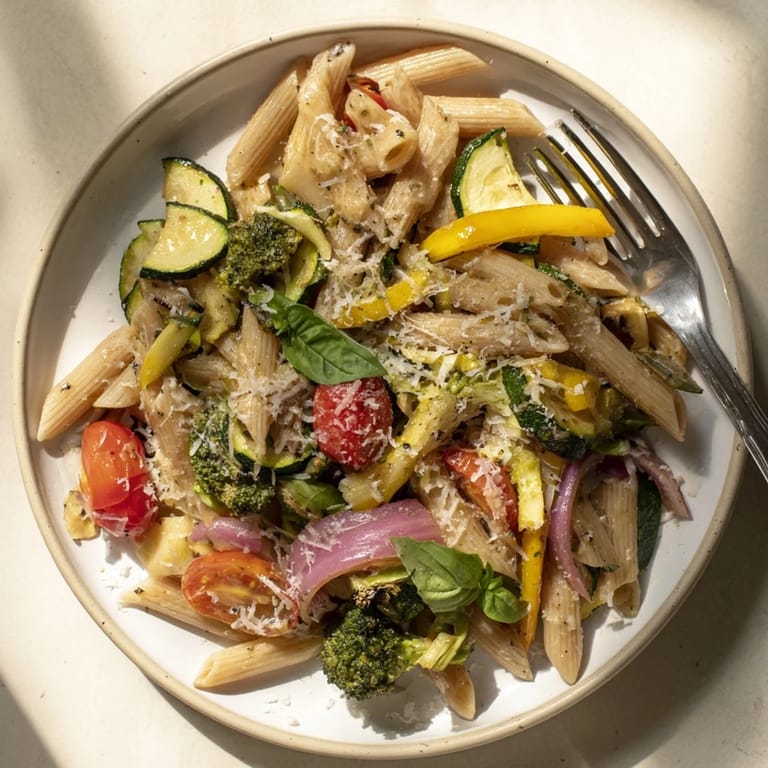
- Remove the skillet from the heat and stir in half the Parmesan and most of the fresh herbs. Taste and adjust the seasoning, then serve in wide bowls topped with the remaining cheese, extra herbs, and a squeeze of lemon if you like.
 Save
Save I served this to my mom on a night when she was too tired to cook, and she sat at the table in silence for a moment before saying it tasted like spring. It wasn't fancy, and I hadn't even plated it nicely, but something about the mix of colors and the simplicity made it feel like more than dinner. That's when I realized some dishes don't need to be complicated to be memorable.
Choosing Your Vegetables
The vegetables listed here are just a starting point, not a strict rule. I've made this with asparagus in April, snap peas in June, and mushrooms in the fall when the market is full of them. The key is using what's fresh and what you actually want to eat, not forcing yourself to track down ingredients that aren't in season. Just make sure whatever you choose can handle high heat and roast in roughly the same amount of time.
Making It a Full Meal
This dish is hearty on its own, but sometimes you want a little more protein to make it feel complete. I've stirred in leftover rotisserie chicken, tossed in sautéed shrimp during the last few minutes, and even added a can of drained chickpeas for a plant based boost. Each version works, and none of them require much extra effort. It's one of those flexible recipes that adapts to whatever your appetite or your fridge is asking for.
Storing and Reheating
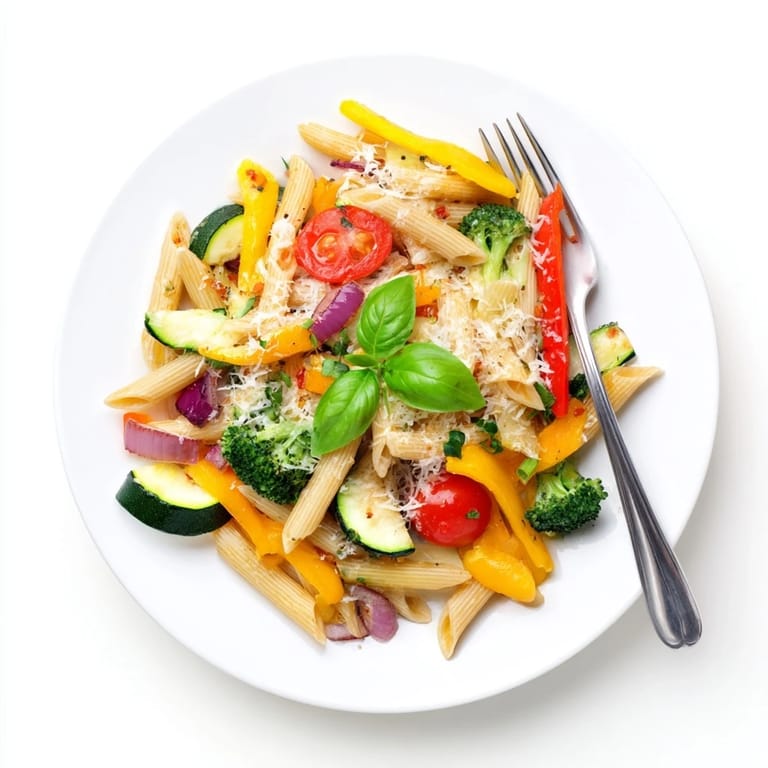
Leftovers keep well in the fridge for up to three days, though the pasta will soak up some of the olive oil as it sits. When you reheat it, add a splash of water or broth to loosen everything up, and warm it gently in a skillet over medium heat. I've even eaten it cold straight from the container, and it still tastes good, almost like a pasta salad.
- Store in an airtight container and keep the extra Parmesan separate so it doesn't get soggy.
- If you know you'll have leftovers, slightly undercook the pasta so it doesn't turn mushy when reheated.
- A drizzle of fresh olive oil and a handful of herbs right before serving makes leftovers taste just made again.
 Save
Save This is the kind of recipe that doesn't ask much from you but gives back something warm and satisfying every time. It's become my answer to overstocked vegetable drawers, last minute dinner guests, and nights when I just want something colorful and uncomplicated on the table.
Recipe FAQs
- → Can I prepare the vegetables ahead of time?
Yes, you can chop and prepare all vegetables up to 24 hours in advance. Store them in airtight containers in the refrigerator. Roast them fresh just before cooking the pasta for best flavor and texture.
- → What pasta shapes work best for this dish?
Penne and fusilli are ideal as their ridges and spirals catch the vegetables and light sauce. Farfalle (bow-tie) and rigatoni also work well. Avoid very thin pastas like spaghetti that may not hold the roasted vegetables as effectively.
- → How can I add more protein to this dish?
Sautéed chicken breast, shrimp, or chickpeas are excellent additions. For chicken, pan-sear cubed or sliced breast separately and add it in the final step. Chickpeas can be roasted alongside the vegetables for a vegetarian protein boost.
- → Can I use frozen vegetables instead of fresh?
Fresh vegetables are recommended for the best roasting results and texture. However, if using frozen, thaw and pat dry first to remove excess moisture, which helps them brown properly in the oven.
- → What wine pairs well with this pasta?
Crisp white wines complement the fresh vegetables beautifully. Try Pinot Grigio or Sauvignon Blanc, which balance the richness of the Parmesan and olive oil while enhancing the vegetable flavors.
- → How do I store leftovers?
Store cooled pasta in an airtight container in the refrigerator for up to 3 days. Reheat gently on the stovetop with a splash of water or olive oil to restore moisture. The dish is also delicious served cold as a pasta salad the next day.