 Save
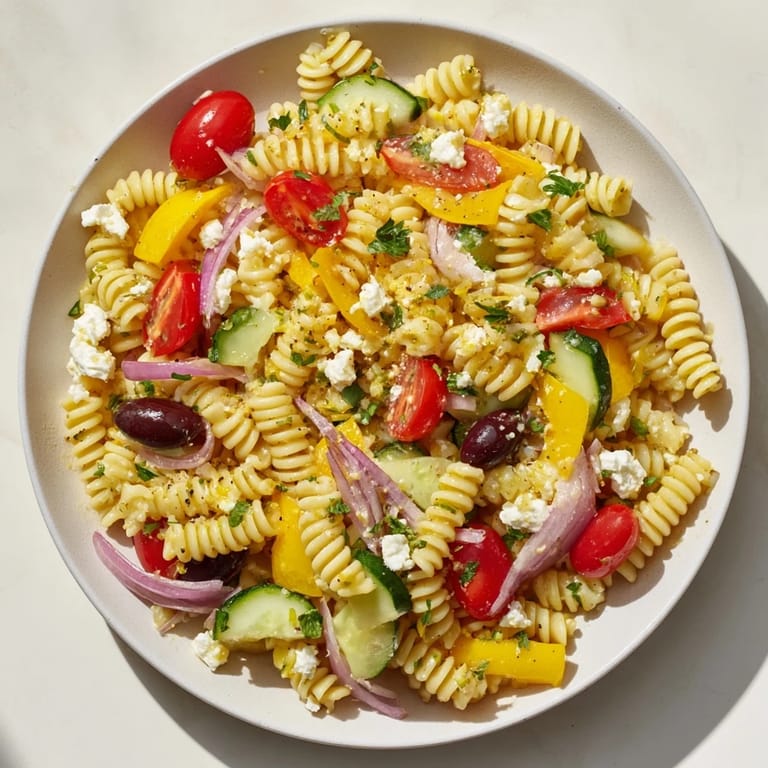
Save I made this pasta salad on a whim last summer when friends texted they were stopping by in an hour. All I had was a box of fusilli, half a lemon, and some vegetables getting a little tired in the crisper drawer. Something about squeezing that lemon over warm pasta made the whole kitchen smell alive, and by the time everyone arrived, it had become this bright, zingy thing that somehow tasted better than anything I'd planned. That's when I realized lemon pasta salad wasn't just food—it was my shortcut to looking like I'd actually been thinking about them.
I brought this to a July potluck where someone's aunt had made three different salads that all looked basically the same. Mine showed up bright yellow-green from the lemon and fresh herbs, and people kept coming back for seconds while the mayonnaise-heavy ones sat untouched. That's when I stopped apologizing for simple food.
Ingredients
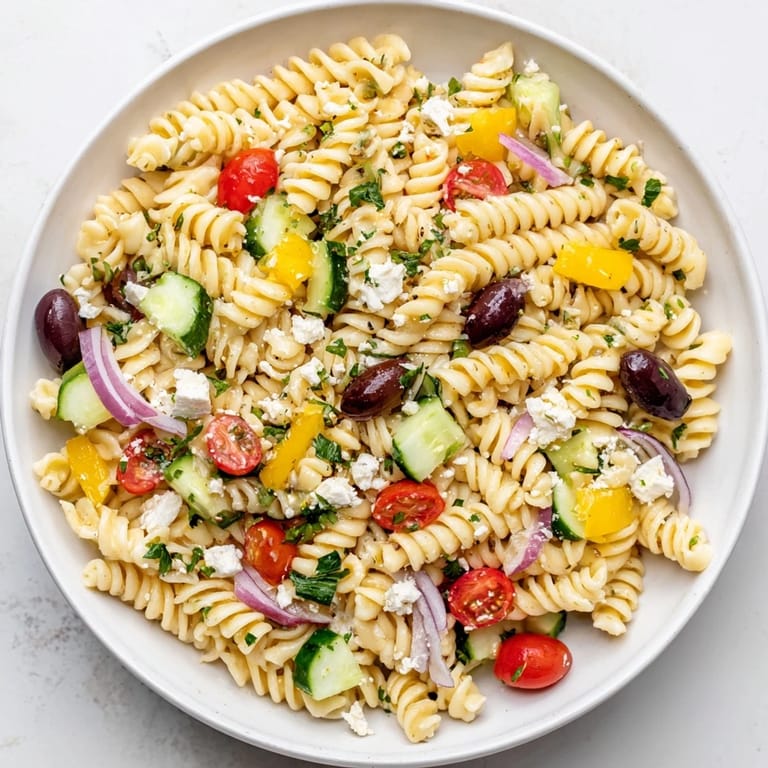
- Pasta (250g short shapes like fusilli, penne, or farfalle): Short, chunky shapes grab the dressing better than long noodles and don't get tangled when you're eating straight from a bowl at the lake.
- Cherry tomatoes (1 cup, halved): They stay firmer than regular tomatoes and their slight sweetness balances the tang of lemon perfectly.
- Cucumber (1 cup, diced): The watery texture keeps everything fresh and prevents the salad from getting heavy, even after sitting out.
- Red onion (1/4 cup, finely chopped): The sharpness mellows as it marinates in the dressing, becoming almost sweet by the time you eat.
- Yellow bell pepper (1/2 cup, diced): Yellow feels sunnier than other colors and adds a gentle sweetness without overpowering the lemon.
- Kalamata olives (1/4 cup, sliced, optional): These add an earthy punch if you want it, but don't use them if you're trying to keep everything light and bright.
- Feta cheese (1/2 cup, crumbled): It doesn't melt into the dressing like softer cheeses, so you get those salty, creamy pockets in every bite.
- Fresh parsley (1/4 cup, chopped): More than just garnish—it brings a clean, grassy note that echoes the lemon.
- Fresh basil (2 tbsp, chopped): Add this at the very end or it bruises and turns dark; a few leaves torn by hand feel more intentional than chopped.
- Extra-virgin olive oil (1/4 cup): This is where you taste the quality—a good one makes the whole salad feel richer.
- Lemon zest and juice (1 whole lemon): Fresh-squeezed makes all the difference; bottled juice tastes thin and one-dimensional by comparison.
- Dijon mustard (1 tsp): It acts as an emulsifier so the dressing doesn't separate, and adds a subtle mustard note that rounds out the flavors.
- Garlic (1 clove, minced): Raw garlic gets stronger as the salad sits, so taste as you go and don't add more unless you're sure.
- Honey or maple syrup (1/2 tsp): Just enough sweetness to make the dressing feel balanced instead of aggressively sour.
- Sea salt and black pepper to taste: Taste after the dressing is made because the lemon juice needs time to marry with the other flavors.
Tired of Takeout? 🥡
Get 10 meals you can make faster than delivery arrives. Seriously.
One email. No spam. Unsubscribe anytime.
Instructions
- Boil and chill the pasta:
- Fill a large pot with plenty of salted water—it should taste like the sea—and bring it to a hard boil. Add pasta and cook until just barely tender; undercooked is better than mushy here because the pasta will continue absorbing flavors as it cools. Drain in a colander and immediately run it under cold water, stirring gently so it stops cooking and separates into individual pieces.
- Prep your vegetables while the water heats:
- This is your secret to not feeling rushed; have everything chopped and ready in small bowls. Cherry tomatoes halved, cucumber into small dice, red onion sliced tissue-thin, bell pepper diced evenly, and herbs roughly chopped but not pulverized.
- Build the salad base:
- Pour the cooled pasta into a large bowl and add all the vegetables, cheese, and herbs in one go. Toss it gently with your hands so you can feel when everything is evenly distributed without crushing the delicate ingredients.
- Make the lemon dressing:
- In a small bowl or jar, whisk together olive oil, fresh lemon zest, lemon juice, Dijon mustard, minced garlic, honey, salt, and pepper. Taste it straight from a spoon—it should taste slightly more lemony and salty than you'd want to drink, because the pasta will soften those edges as everything melds.
- Dress and toss:
- Pour the dressing over the salad and toss everything together gently but thoroughly, using your hands if you need to feel that the dressing has reached every piece. The pasta should glisten but not be glossy and oil-heavy; if it looks greasy, you've added too much dressing.
- Chill and adjust before serving:
- Cover and refrigerate for at least thirty minutes so the flavors can settle and marry together. Taste it again right before serving and add a squeeze more lemon juice or a pinch of salt if it needs brightness; cold food always needs more seasoning than you think.
 Save
Save A friend who normally doesn't eat salad went back for thirds at a dinner party and asked if I'd made the pasta with magic. It wasn't magic—just attention and fresh ingredients—but watching someone's face change when food tastes like you actually cared was worth every minute of chopping.
Why Lemon Is the Secret
Lemon doesn't just flavor this salad; it acts like a preservative and a brightener all at once. The acid keeps the vegetables from oxidizing and turning dull, which means the colors stay vivid even hours after serving. I learned this by accident when I made the salad in the morning for an evening event and was shocked to find it looked just as fresh as when I'd tossed it. Now I use that truth to my advantage—make it early, and everything only improves.
Flexibility and Variations
This recipe thrives on improvisation. Grilled chicken breast torn into pieces turns it into a complete dinner, or you can stir in white beans or chickpeas if you want protein without the heaviness of meat. I've made it with goat cheese when I ran out of feta and honestly preferred the tanginess. The dressing is sturdy enough that it handles almost any addition you want to throw at it, as long as you remember that every new ingredient will need a little more seasoning to balance.
Serving and Storage
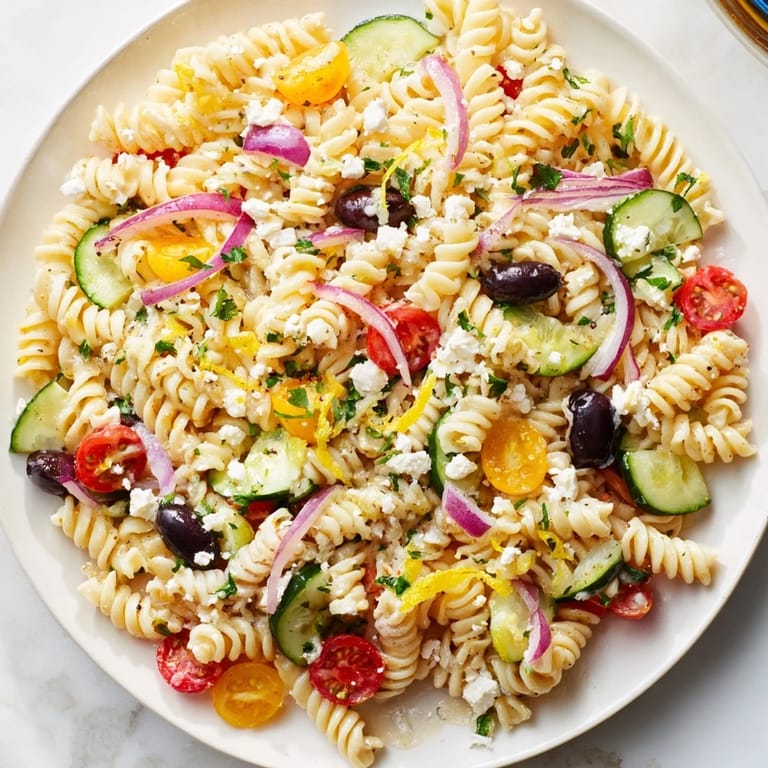
This salad travels beautifully and actually improves over a day or two in the refrigerator, which makes it the ideal choice for meal prep or potlucks. Pack it in a container with the lid slightly ajar in your cooler so condensation doesn't make it soggy, and trust that the dressing will keep everything tasting fresh even after a long drive to a picnic.
- If you're making it ahead, hold back the fresh basil and add it just before serving so it stays bright green instead of bruising dark.
- Leftover salad stays good for three days in the fridge, though the cucumber gets softer—just toss it before eating and taste for seasoning.
- This pairs perfectly with grilled fish, roasted chicken, or just crusty bread if you want to eat it as a light lunch all by itself.
 Save
Save This pasta salad taught me that the simplest recipes often taste the best, and that feeding people something bright and alive makes them feel like you've given them something thoughtful. Make it for someone you like.
Recipe FAQs
- → What type of pasta works best?
Short pasta shapes like fusilli, penne, or farfalle hold the dressing and mix-ins well, making them ideal choices.
- → Can the dressing be made ahead?
Yes, the lemon dressing can be whisked together in advance and stored in the refrigerator to allow flavors to meld.
- → How can I make this dish vegan?
Simply omit the feta cheese or substitute with a plant-based alternative to keep it vegan-friendly.
- → Is it possible to add protein?
Yes, grilled chicken, shrimp, or chickpeas are excellent additions to boost protein content.
- → What are good serving suggestions?
This vibrant pasta pairs well with crisp white wines and can accompany light summer meals or picnics.