 Save
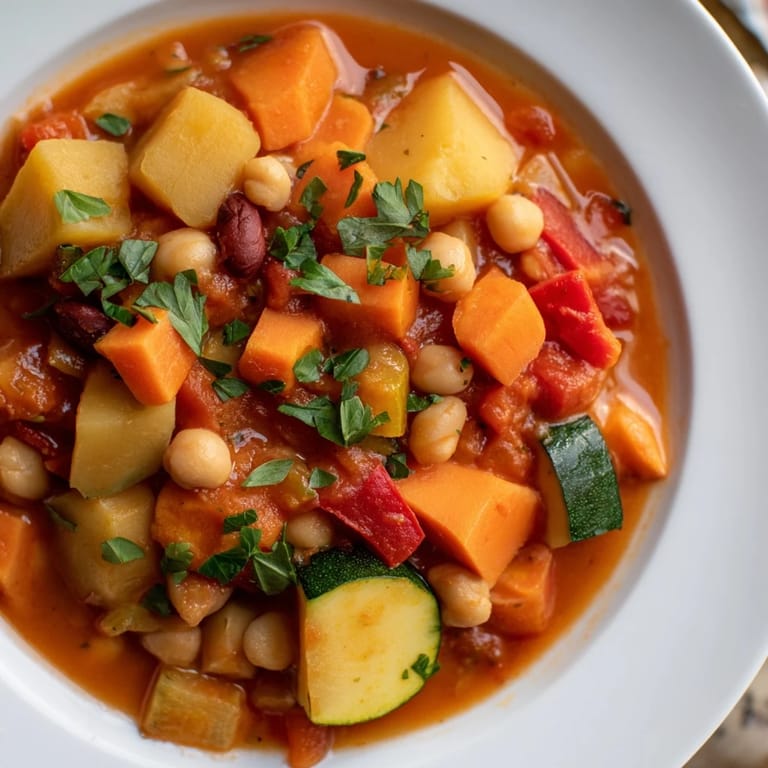
Save I discovered this stew on a November evening when the kitchen felt too quiet and my fridge was overflowing with vegetables I'd bought with good intentions. There's something about the smell of cumin and smoked paprika hitting hot oil that made me forget about the rain outside. I threw together what I had—sweet potatoes, beans, tomatoes—and within an hour, my apartment smelled like comfort itself. That first bowl, with the broth pooling around tender cubes of sweetness, reminded me why cooking for yourself matters.
My friend Marcus came over unannounced on a Tuesday, and I had maybe thirty minutes before he arrived. This stew was my answer—by the time he sat down, the apartment was warm and smelled intentional. He had thirds, then asked for the recipe, then started making it himself. There's a particular kind of pride in feeding someone something that's both simple and real.
Ingredients
- Sweet potatoes: They're the soul of this stew, their natural sweetness anchoring everything else and turning creamy as they soften.
- Yukon Gold or russet potatoes: These keep the stew grounded and add body without overpowering the other flavors.
- Carrots: I learned to slice them slightly thicker than you'd think so they don't disappear into the broth.
- Onion, celery, and garlic: The holy trinity that teaches you to smell your way through cooking rather than just watching the clock.
- Red bell pepper and zucchini: They add brightness and color, plus a subtle sweetness that rounds out the earthiness.
- Cannellini or kidney beans: Beans are the quiet protein here, soft enough to almost dissolve into the broth.
- Chickpeas: These keep their shape better, giving you something substantial to bite into.
- Diced tomatoes and tomato paste: Tomato paste goes in early to deepen, while the canned tomatoes add body and slight acidity.
- Vegetable broth: Quality matters here since it's the foundation everything else builds on.
- Smoked paprika, thyme, cumin: Together they create a warmth that feels familiar even if you've never had this exact combination before.
- Bay leaf: It whispers in the background, something you taste but can't quite name.
- Olive oil: Good oil makes the vegetables sing when they first hit the pot.
Tired of Takeout? 🥡
Get 10 meals you can make faster than delivery arrives. Seriously.
One email. No spam. Unsubscribe anytime.
Instructions
- Start with the base:
- Heat your olive oil over medium heat and let it warm until it shimmers slightly. Add the diced onion, celery, and carrot slices, then sauté for about five minutes until the onion turns translucent and the kitchen starts to smell alive.
- Build the flavor:
- Stir in the minced garlic, red bell pepper, and diced zucchini. You'll notice how quickly garlic releases its scent—after about three minutes, when your mouth starts watering a little, you know it's time to move forward.
- Toast the spices:
- Add the sweet and regular potatoes along with the smoked paprika, thyme, cumin, pepper, and salt. Let everything sauté for two minutes—this is when the spices wake up and coat everything with fragrance.
- Deepen with tomato:
- Stir in the tomato paste first, working it through the vegetables so it caramelizes slightly, then pour in the diced tomatoes and vegetable broth. Add your bay leaf and bring everything to a boil.
- Let time do the work:
- Lower the heat, cover the pot, and let it simmer for twenty minutes. You want the potatoes to be just tender when you pierce them—not falling apart, but no resistance either.
- Add the beans:
- Stir in the cannellini beans and chickpeas, then let everything simmer uncovered for another ten to fifteen minutes. This is when flavors start talking to each other instead of standing alone.
- Finish and taste:
- If you're using spinach, stir it in now and let it wilt for two minutes. Taste everything, adjust your salt if needed, fish out the bay leaf, and you're ready to serve.
 Save
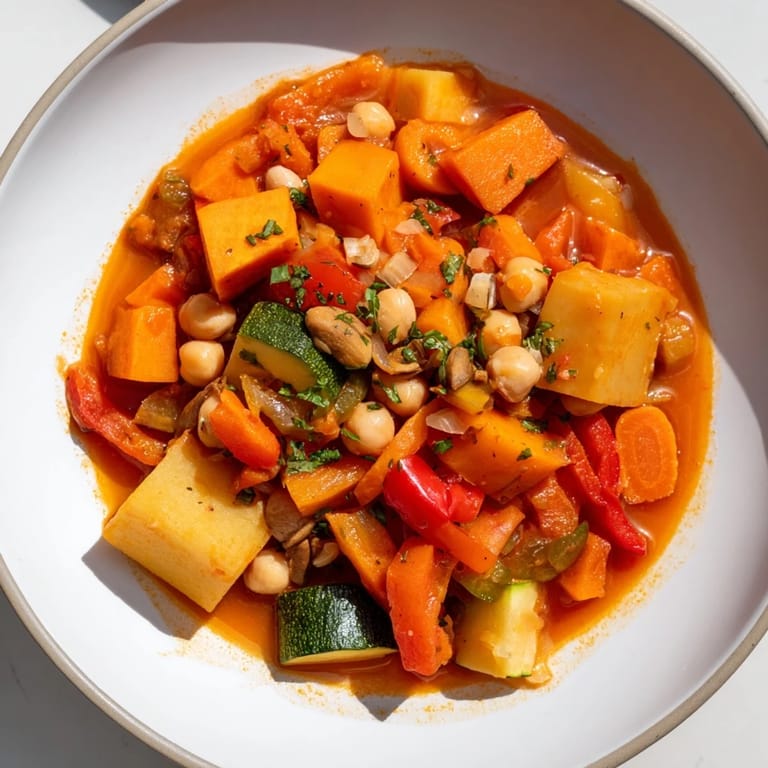
Save The first time I made this in larger quantities, I realized how a stew becomes something beyond ingredients—it becomes a moment where you step away from your phone and your worries for an hour. My hands got dirty chopping vegetables, my kitchen filled with steam, and by the time I sat down to eat, I felt genuinely calmer.
Why This Stew Works for Almost Any Day
There's flexibility built into this recipe that makes it forgiving and personal. Change the vegetables based on what you have—celery root instead of regular potatoes, butternut squash instead of sweet potatoes—and the stew will still taste intentional. I've made it in summer with fresh zucchini from a farmer's market and in deep winter with frozen spinach, and both versions tasted like exactly what I needed that day.
The Science of a Better Broth
The longer this stew simmers, the more the starches from the potatoes thicken the broth naturally. This isn't accidental—it's why the stew transforms between hour one and hour two. The beans also release starches, making everything velvety without any cream or flour. If your broth seems thin after the first twenty minutes, don't worry; those last fifteen minutes with the beans in the pot create the body you're hoping for.
Serving and Storage
This stew becomes your friend over multiple days, tasting richer and more settled in the fridge. I've eaten it at lunch three days running and looked forward to it each time. Serve it with good bread to soak up the broth, or spoon it over rice if you want something more substantial.
- Reheat gently on the stovetop with a splash of broth so nothing dries out.
- Freeze it in portions for mornings when you need something warm and honest.
- Add fresh lemon juice just before eating to brighten everything slightly.
 Save
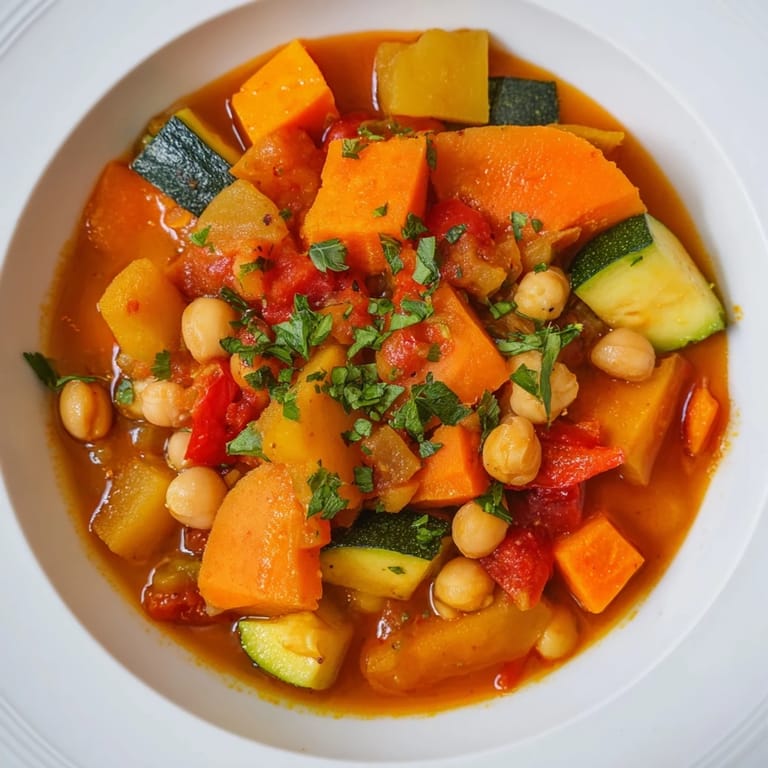
Save This stew asks very little of you and gives back warmth, nourishment, and the satisfaction of having cooked something real. That's enough.
Recipe FAQs
- → Can I use different types of beans in this stew?
Yes, you can substitute cannellini or kidney beans with chickpeas, lentils, or other legumes to suit your taste or availability.
- → How can I make this stew spicier?
Adding ½ teaspoon of chili flakes during cooking will introduce a gentle heat to the stew without overpowering the other flavors.
- → Is it necessary to add baby spinach?
Baby spinach is optional but adds a fresh, leafy element that wilts quickly and complements the heartiness of the stew.
- → What are some suitable side dishes to pair with this stew?
Crusty bread, steamed rice, or quinoa work well to soak up the flavorful tomato broth and complete the meal.
- → Can I prepare this stew ahead of time?
Yes, this stew stores well in the refrigerator and its flavors often deepen after resting, making it perfect for meal prep.