 Save
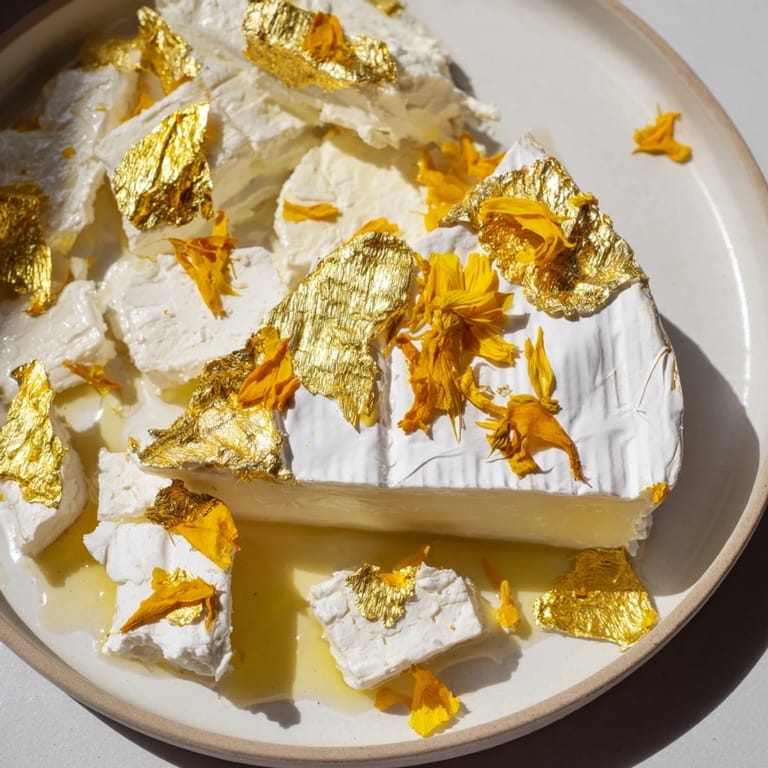
Save The first time I arranged edible gold on cheese, I felt a little ridiculous—like I was gilding a lily, which, as it turns out, is exactly the point. My friend Sarah showed up with a box of gold leaf for her daughter's engagement party, and we spent an hour in the kitchen debating whether this was elegant or over the top. By the time we added those yellow petals and stepped back, we both understood: some dishes aren't just about taste, they're about the gasp when someone sees them.
I learned the magic of this platter at a winter wedding where everything felt hushed and formal. Someone had made one of these, and watching people's faces light up as they approached it—before they'd even tasted anything—taught me that presentation isn't shallow. It's hospitality made visible.
Ingredients
- Goat cheese log (chèvre), 150 g: The tangy backbone that cuts through richness; its chalky texture softens beautifully when room temperature hits it.
- Triple-cream brie, 150 g: The luxurious one that melts on your tongue and makes people close their eyes slightly.
- Fresh ricotta, 150 g: Mild and almost cloud-like, it's the bridge between sharp and buttery.
- Feta block, 150 g, drained: Salty and crumbly, it adds the only real edge to the board—necessary contrast.
- Edible gold leaf, 1–2 sheets: Flavorless and gossamer-thin; it's pure theater that somehow feels more special than it has any right to.
- Yellow edible flower petals, 2 tbsp: Buy only from suppliers who actually label them as edible; they add color that photographs beautifully and tastes subtly floral.
- Honey, 2 tbsp optional: A whisper of sweetness that plays against the salt and tang, or skip it if you want the cheeses to speak for themselves.
- Fresh microgreens or herbs: A last-minute flourish that catches light and adds texture.
- Baguette, 1, thinly sliced: Use gluten-free if needed; the bread isn't the star, just the vehicle.
- Assorted crackers: Let people choose their own vehicles.
Tired of Takeout? 🥡
Get 10 meals you can make faster than delivery arrives. Seriously.
One email. No spam. Unsubscribe anytime.
Instructions
- Arrange your cheeses with intention:
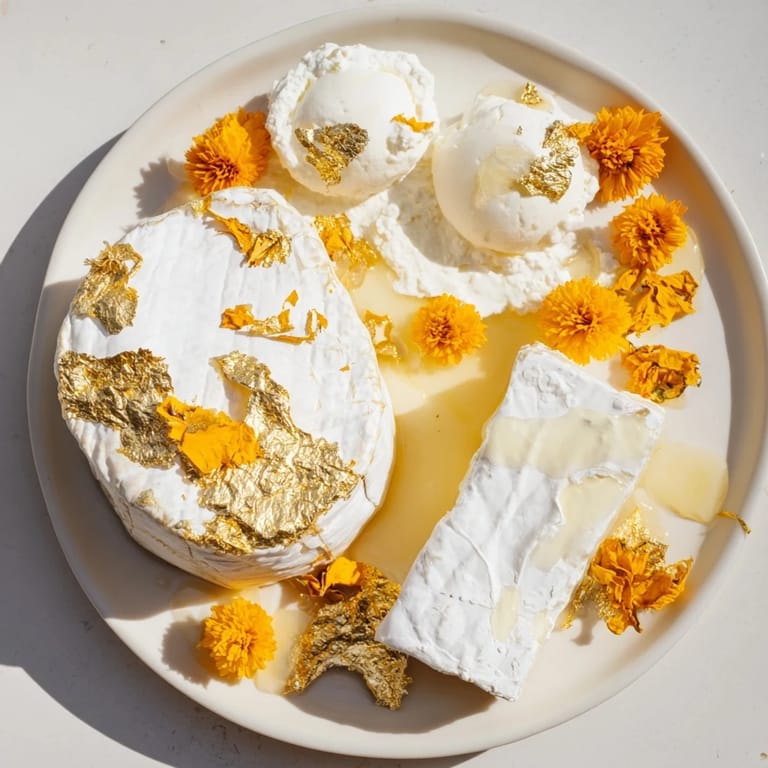
- Place each cheese on the platter with space around it—they should look like individuals who've chosen to gather, not a pile. At room temperature, they'll soften slightly and become more inviting.
- Apply gold leaf like you're painting light:
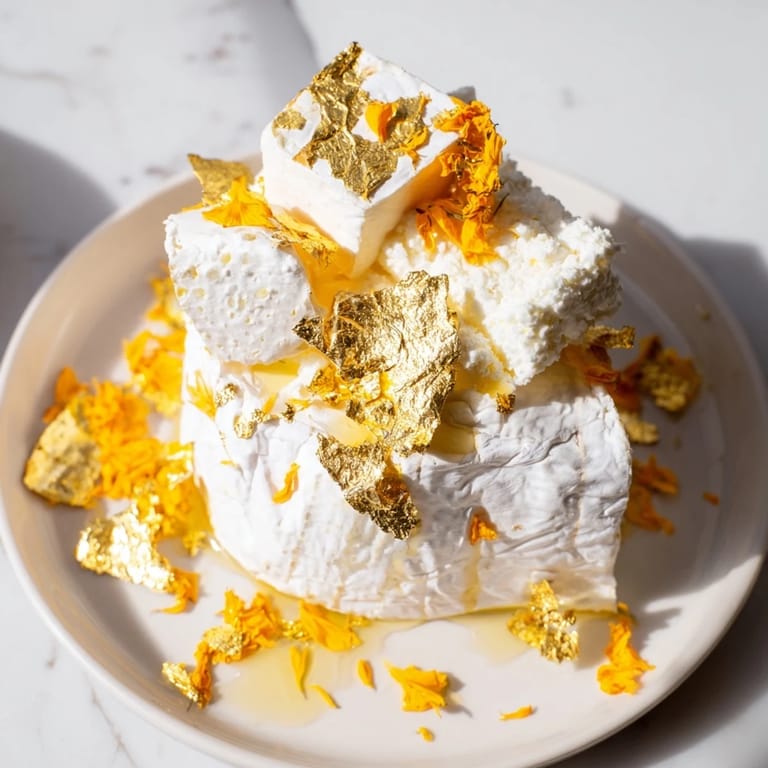
- Use clean tweezers or a soft brush to lay down small pieces across the surface of each cheese. It sticks on its own, so gentle pressure is all you need; this is where patience matters more than speed.
- Scatter the petals with a light hand:
- Yellow flowers should look accidental, like someone tossed them and they landed perfectly. Cluster some around the cheeses and scatter a few across the platter itself.
- Add honey if you're going for warmth:
- Drizzle it lightly over one or two cheeses so it catches the eye without overwhelming. The combination of honey, salt, and acid is a flavor moment worth experiencing.
- Crown it with herbs or microgreens:
- Add these right before serving so they stay bright and don't wilt into invisibility.
- Set it out with bread and crackers nearby:
- Let people build their own bites; that's half the pleasure.
 Save
Save There was a moment at Sarah's daughter's engagement party when her future mother-in-law took a small piece of the brie-and-petal combination and just paused. She didn't say anything, just looked at the platter, then at Sarah, then back at the platter. That's when I realized this board wasn't fancy for fancy's sake—it was a love language made edible.
The Secret Life of Cheese Boards
A beautiful cheese board does something unexpected: it slows people down. They linger, they talk more, they taste more thoughtfully. The gold and flowers aren't just decoration; they're permission to be indulgent without apology, to take your time, to notice what you're eating. This is why elegant boards matter at parties—they set the tone for the whole evening.
Cheese Temperature and Flavor
Cold cheese is muted cheese. The fats are tight, the flavors are locked. But bring it to room temperature—even just 15 or 20 minutes—and suddenly the goat cheese tastes tangier, the brie becomes silkier, the ricotta floats between clouds. Temperature is underrated as a flavor tool, but once you notice it, you can't un-notice it.
Sourcing and Presentation Magic
The beauty of this platter is that it looks like you spent hours, but the real work is in choosing quality cheeses and sourcing edible elements from people who actually know what they're selling. A good cheese shop or specialty grocer will have edible flowers; an art supply store will not, no matter how similar they look.
- Buy your gold leaf and flowers no more than a day or two before serving so they stay vivid and delicate.
- If you can't find edible flowers, skip them entirely rather than improvise with regular ones—microgreens and fresh herbs are always a safe, beautiful substitute.
- Taste each cheese before it goes on the platter so you know what story you're telling with your arrangement.
 Save
Save This platter has become my answer to the question of how to celebrate without overthinking. It's simple enough that anyone can make it, beautiful enough that it feels intentional, and delicious enough that people forget they're eating from a board that also happens to be artwork.
Recipe FAQs
- → What cheeses are included in the platter?
It features goat cheese log (chèvre), triple-cream brie, fresh ricotta, and block-style feta.
- → How is the edible gold leaf applied?
Use clean, dry tweezers or a fine brush to gently place small pieces onto the cheese surfaces.
- → Can I substitute the yellow flower petals?
Yellow edible petals like marigold, calendula, or chrysanthemum are recommended for their color and safety.
- → What accompaniments work best with this platter?
Thinly sliced baguette and assorted crackers provide an ideal base for serving the cheeses.
- → Is there a vegan alternative for the cheeses?
Yes, plant-based white cheeses can be used to create a vegan-friendly version.