 Save
Save There's something about the smell of garlic hitting hot oil that makes me stop whatever I'm doing. One random Tuesday evening, I had a friend cancel last-minute, and I was left with a box of penne and a bunch of spinach that needed eating. I threw together this creamy sauce on instinct, and honestly, it turned into the kind of meal that made me realize I didn't need an excuse or an audience to cook something that felt special. That quiet dinner alone became a favorite ritual.
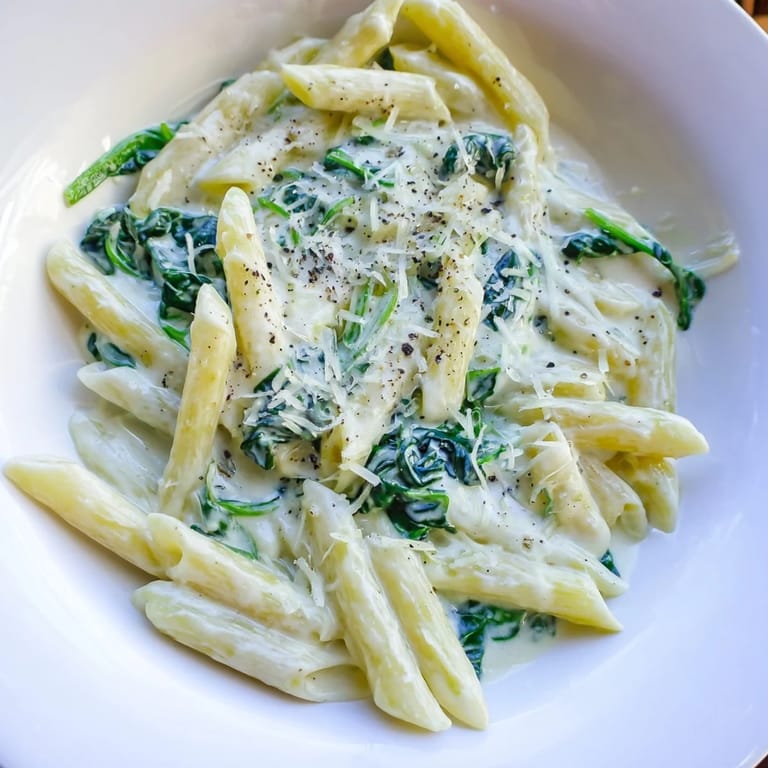
I made this for my partner when they were feeling under the weather, and they actually asked for seconds. That's when I knew this wasn't just a throw-together meal, but something with real staying power. The cream wraps around the pasta like a hug, and the spinach melts into it so completely that it feels decadent without being heavy.
Ingredients
- Penne or fettuccine, 350g: Penne cups the sauce beautifully and holds onto every creamy bit, though fettuccine works if you prefer long strands that cling together.
- Olive oil, 2 tbsp: Good quality makes a difference here since it's the foundation of your sauce, not hidden in the background.
- Garlic, 3 cloves minced: Mince it fine so it dissolves into the oil rather than leaving chunks; this is where the fragrance comes from.
- Fresh spinach, 200g roughly chopped: Don't pack it down when you measure, and chop it loose so it wilts faster and releases its moisture into the sauce.
- Heavy cream, 250ml: This is the backbone; don't swap it for milk or the sauce will break and split.
- Parmesan cheese, 50g grated: Freshly grated tastes sharper and melts smoother than pre-grated versions, which contain anti-caking agents.
- Ground nutmeg, ¼ tsp: This tiny amount awakens the cream without making it taste like dessert; measure carefully because it's stronger than you think.
- Black pepper and salt, to taste: Taste as you go because everyone's salt tolerance is different, and seasoning at the end lets you balance everything.
Tired of Takeout? 🥡
Get 10 meals you can make faster than delivery arrives. Seriously.
One email. No spam. Unsubscribe anytime.
Instructions
- Get your pasta water ready:
- Fill a large pot with water and salt it generously, like seawater. Bring it to a rolling boil before adding pasta so it cooks evenly and you have starchy water to loosen the sauce later if needed.
- Cook the pasta:
- Add pasta and stir it a few times in the first minute so it doesn't stick to itself. Drain when it's still slightly firm to the bite, and keep that pasta water nearby.
- Make the garlic base:
- While pasta cooks, heat olive oil in a large skillet over medium heat and add your minced garlic. You're listening for a gentle sizzle and watching for it to turn golden and fragrant, which takes about a minute; don't let it brown or it turns bitter.
- Wilt the spinach:
- Dump in your chopped spinach all at once, it'll look like a mountain of green. Stir it for two to three minutes until it's completely soft and releases its water into the pan; this liquid is flavor, not waste.
- Pour in the cream:
- Lower your heat to medium-low before adding the cream so it doesn't break or separate. Stir gently and let it warm through for a couple of minutes until it's steaming but not bubbling hard.
- Season and thicken:
- Add the Parmesan, nutmeg, pepper, and a pinch of salt, stirring until the cheese melts completely and the sauce looks velvety. Let it simmer for two to three minutes and you'll feel it get slightly thicker as the cream reduces.
- Bring it all together:
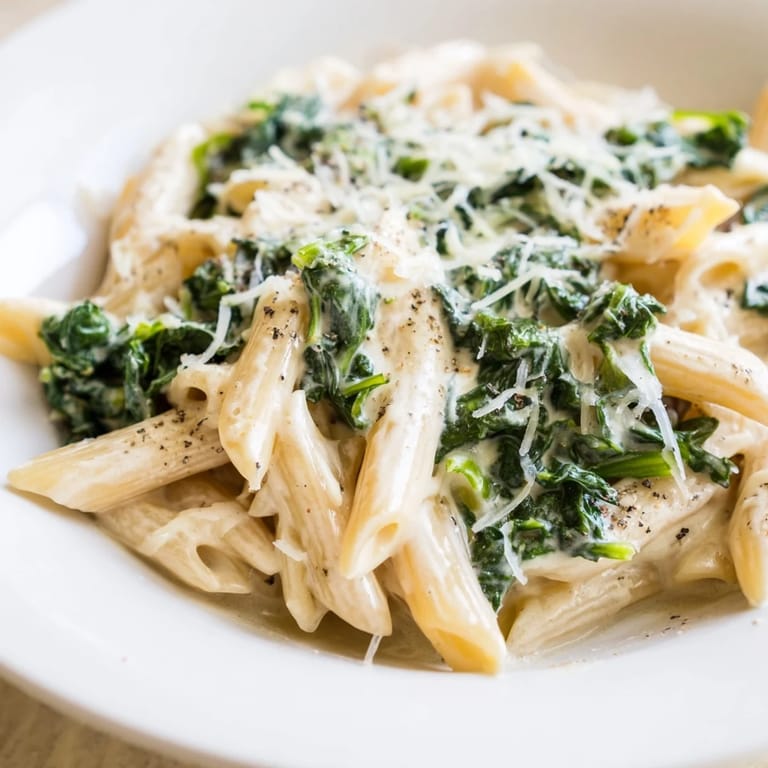
- Toss the warm pasta into the skillet and coat it slowly, watching how the sauce clings to every piece. If it feels too thick, add a splash of that reserved pasta water until it moves like silk around the pasta.
 Save
Save I learned the nutmeg trick by accident when I grabbed the wrong jar and didn't realize until after, but the warmth it added made the whole dish feel more sophisticated. It taught me that sometimes mistakes become the best discoveries in your own kitchen.
Choosing Your Pasta Shape
Penne and fettuccine are the obvious choices, but I've also used rigatoni or even bow ties and they all work because of the ridges and curves that catch cream. The shape doesn't matter as much as the surface area; smoother pastas like spaghetti let the sauce slide right off, which is why I avoid them here.
Spinach Varieties That Work
Fresh baby spinach is the easiest because it's already tender and needs less cooking time. Mature spinach has more flavor but can be slightly gritty, so rinse it well before chopping. Either way, the cream mellows out any earthy notes and transforms spinach into something almost sweet.
Customizing Without Losing the Soul
The beauty of this dish is how forgiving it is when you want to add something. Sautéed mushrooms slip in seamlessly, cooked chicken makes it heartier, and sun-dried tomatoes add a tangy note that brightens everything.
- If you're adding protein, cook it separately and toss it in at the very end so the sauce stays silky.
- Fresh herbs like basil or parsley should go on after plating so they stay bright instead of wilting into gray bits.
- A squeeze of lemon juice right before serving wakes up the whole dish without making it taste acidic.
 Save
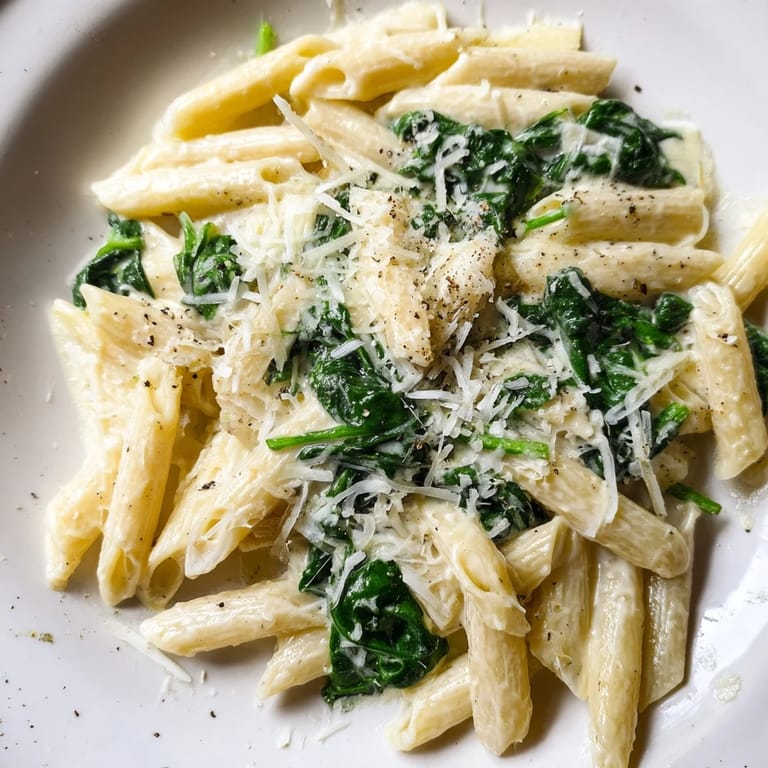
Save This is the kind of meal that feels effortless once you've made it once, but tastes like you spent hours thinking about it. Keep it in your back pocket for those nights when you need something comforting and real, without the fuss.
Recipe FAQs
- → What type of pasta works best with this dish?
Penne or fettuccine are ideal, as they hold the creamy sauce well, but other shapes can be used based on preference.
- → Can I substitute the heavy cream for a lighter option?
Yes, half-and-half can be used for a lighter sauce with slightly less richness.
- → How do I prevent the sauce from becoming too thick?
Reserve some pasta water when cooking and add it gradually until the desired sauce consistency is achieved.
- → What are good additions for extra protein?
Sautéed mushrooms or cooked chicken pair well to add more protein to the dish.
- → Is this dish suitable for gluten-free diets?
Yes, substituting regular pasta with gluten-free pasta makes it suitable for gluten-free diets.