 Save
Save The first time I made bulgogi, I was standing in a Korean market at dusk, surrounded by hanging meats and the smell of sesame oil drifting from the deli counter. A woman next to me picked up a package of thinly sliced beef and said something to her friend that made them both laugh—I didn't understand the words, but I understood the anticipation. That moment stayed with me, and weeks later, when I finally tried making it at home, I realized why: bulgogi isn't just about technique, it's about creating something that brings people to the table with genuine excitement.
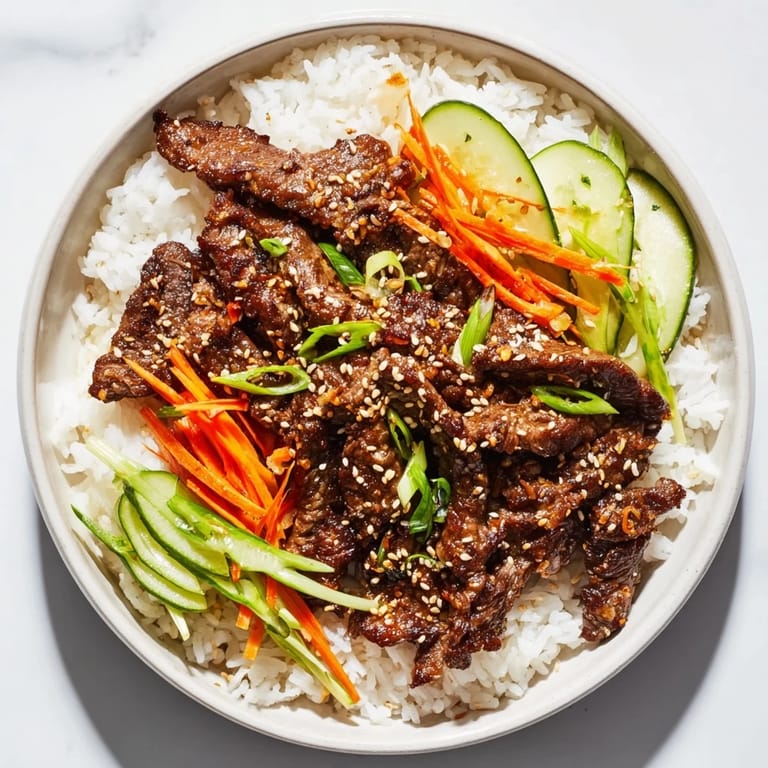
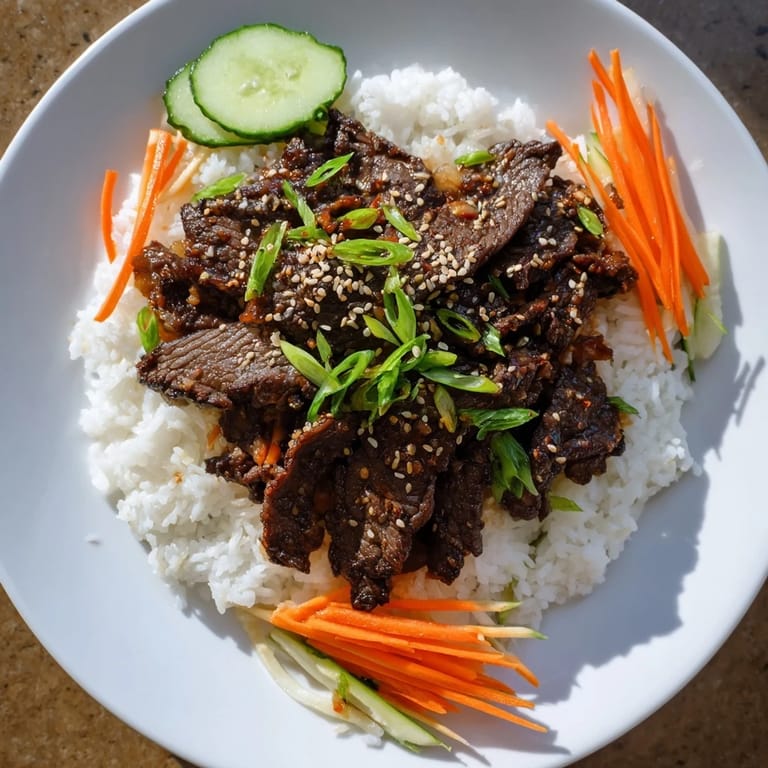
I made this for my neighbor on a random Tuesday when she'd had a terrible day, and watching her face as she took the first bite—that small, quiet smile—reminded me why I cook at all. The rice was warm, the beef was tender and glistening with that caramelized glaze, and somehow a bowl of food became an apology and a comfort all at once.
Ingredients
- Beef sirloin or ribeye, thinly sliced (500 g): The thinness is everything here—it cooks in minutes and drinks in the marinade like it's been waiting its whole life for this moment.
- Soy sauce (3 tbsp): This is your salt and depth; don't skimp, but also don't go rogue with measurements.
- Brown sugar (2 tbsp): Creates that glossy, almost caramelized finish that makes people ask what your secret is.
- Sesame oil (1 tbsp): A little goes a long way—this is the signature whisper that says Korean kitchen.
- Rice vinegar (1 tbsp): Brightens everything and keeps the marinade from being one-note.
- Garlic and ginger (2 cloves, 1 thumb-sized piece): Minced and grated fine—these aren't background players, they're the ones who make you feel alive.
- Asian pear, grated (1 whole): If you can't find one, a sweet apple works, but the pear adds an almost floral sweetness that regular fruit can't quite match.
- Gochujang (1 tbsp, optional): Korean chili paste that adds heat and umami depth if you want a little more personality.
- Scallions and toasted sesame seeds: These live in the marinade and again as garnish—they're the bookends of flavor.
- Jasmine or short-grain rice (2 cups cooked): The canvas for everything else; choose rice that holds together but isn't mushy.
- Raw vegetables (carrots, cucumber, bean sprouts): The crunch and freshness that keeps this from feeling heavy; julienne and slice them thin so they stay bright.
Tired of Takeout? 🥡
Get 10 meals you can make faster than delivery arrives. Seriously.
One email. No spam. Unsubscribe anytime.
Instructions
- Build the marinade:
- Combine soy sauce, brown sugar, sesame oil, rice vinegar, minced garlic, grated ginger, grated pear, gochujang if using, most of the scallions, sesame seeds, and black pepper in a large bowl. This is where the magic happens—stir it until the sugar dissolves and the whole thing smells like you're cooking something special.
- Marry the beef:
- Add your thinly sliced beef and toss gently until every piece is coated in that glossy marinade. Cover and let it sit for at least 15 minutes, though an hour is even better if you have the time.
- Sear it hot:
- Heat a large skillet or wok over high heat until it's almost smoking, then add the beef in a single layer (work in batches if you need to). Let it sit for 30 seconds before stirring—you want those edges to catch and caramelize, not steam themselves into submission.
- Assemble with intention:
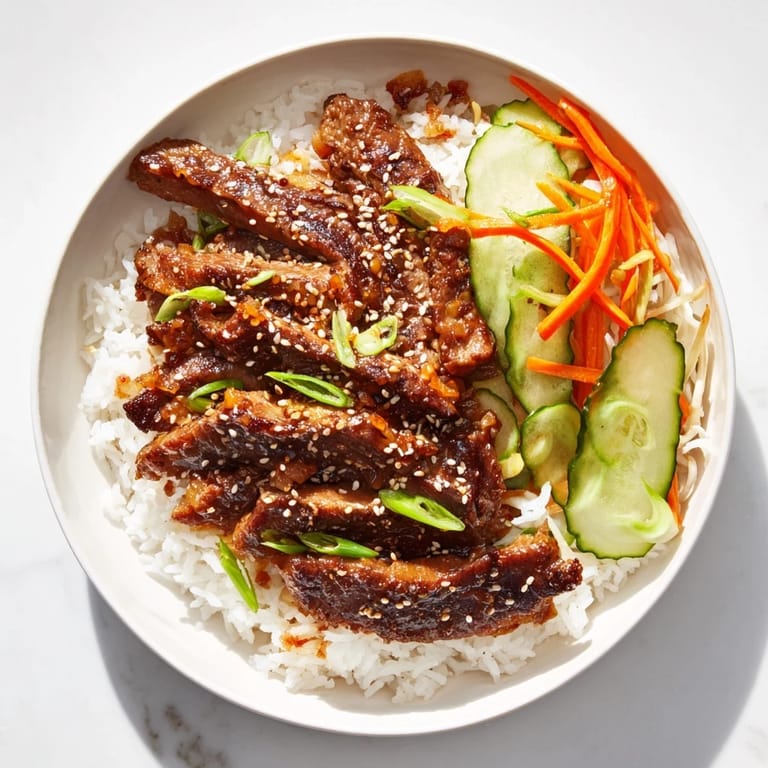
- Divide warm rice among bowls, then arrange the beef, carrots, cucumber, blanched bean sprouts, and kimchi if you're using it in little sections on top. This isn't just plating; this is giving people choices and textures with every spoonful.
- Finish and serve:
- Scatter fresh scallions and toasted sesame seeds across everything, then eat while it's still warm and the rice is still steaming underneath.
 Save
Save There's something almost meditative about the moment when you pour that marinade over raw beef and know that in fifteen minutes, it's going to transform into something tender and caramelized and beautiful. It's faith in flavors and timing, and every single time it works.
The Vegetable Question
Raw vegetables aren't just decoration here—they're the counterpoint to the rich, sweet beef. The cucumber stays cool and slightly watery, the carrots add a subtle sweetness that echoes the marinade, and the blanched sprouts bring a delicate nuttiness. I learned to blanch the sprouts for just two minutes after my first attempt at eating them raw left them tasting faintly grassy and making the whole bowl feel unbalanced.
Time and Temperature Matter
The whole appeal of bulgogi is speed—it's fast food, technically, but the kind that feels intentional and warm. The beef shouldn't sit in the pan more than three minutes total; you want it still slightly soft in the center, still blushing a little pink if you like it that way, with just those caramelized edges that catch the light. Overcook it even slightly and you'll feel it in the texture, a slight toughness that whispers you waited too long.
Building Your Own Bowl
What I love most about this recipe is how it invites improvisation without losing its soul. Some nights I add a fried egg, other nights a spoonful of kimchi if I'm craving heat, sometimes gochujang mixed into the rice itself. Your bowl should tell you what you need, and it should taste like something you made on purpose, not something you followed blindly.
- Try adding a raw egg yolk that breaks into the warm rice and becomes its own sauce.
- A dollop of gochujang mayo on the side turns this into something even more luxurious.
- Leftovers reheat beautifully, though the vegetables will soften—fresh ones added at the last moment keep everything alive.
 Save
Save This bowl has fed my friends on their worst days and brightened their best ones. That's the kind of recipe worth keeping close.
Recipe FAQs
- → What cut of beef works best for this dish?
Sirloin or ribeye are ideal choices due to their tenderness and quick cooking properties.
- → How long should the beef marinate?
A minimum of 15 minutes ensures good flavor absorption; marinating up to an hour deepens the taste.
- → Can I adjust the spice level?
Yes, adding gochujang can elevate the heat, but it is optional and can be reduced for milder taste.
- → What rice types are recommended?
Jasmine or short-grain white rice work well for this bowl, providing a soft and sticky base.
- → Are there gluten-free options available?
Using gluten-free soy sauce (tamari) and gluten-free gochujang ensures the dish is safe for gluten-sensitive individuals.
- → How can I make this low-carb?
Substitute the steamed rice with cauliflower rice to reduce carbohydrates without sacrificing texture.